What Is the Perceived Stress Scale (PSS-10)? A Complete Guide to Testing, Scoring, and Next Steps
The Perceived Stress Scale (PSS) is one of the most widely used and researched questionnaires for understanding how stressed you feel in the past month. Unlike medical tests that measure hormones or blood pressure, the PSS focuses on your experience: how unpredictable, uncontrollable, and overloaded life has felt recently. This makes it a practical, validated mental health tool for self-checks, coaching, and clinical research.
If you want a quick snapshot of your current stress level, you can start with a quick free stress test and then use this guide to understand what your score means and what to do next.
Why the Perceived Stress Scale Matters
Stress is a normal part of life, but chronic stress can disrupt sleep, mood, focus, and physical health. Over time, high stress is associated with increased risk of anxiety, depression, cardiovascular disease, and burnout. The PSS helps you catch rising stress early, track changes over time, and evaluate whether your stress management strategies are working.
- Validated: The PSS has been studied since 1983 (developed by Cohen, Kamarck, and Mermelstein). The 10‑item version (PSS‑10) is the most commonly used because it balances accuracy with speed.
- Actionable: You get a clear stress score that you can compare week-to-week or after lifestyle changes.
- Accessible: It works well as a quick stress level test for general use and can complement clinical assessments, coaching, or wellness programs.
PSS-10 vs. Other Versions
The PSS has three main versions: PSS‑14, PSS‑10, and PSS‑4. Research consistently shows that PSS‑10 offers excellent reliability and validity while taking only a couple of minutes to complete. This guide focuses on the PSS‑10 format used most often in research and real-world stress assessment.
Who Should Consider the PSS-10?
Anyone who wants an evidence-based snapshot of their recent stress can benefit. Common groups include:
- Students preparing for exams or transitioning into new academic demands
- Professionals experiencing workload shifts or role changes
- Caregivers, new parents, and people balancing multiple responsibilities
- Individuals working on sleep, mood, or productivity
- People starting new wellness routines who want to track progress
How the PSS-10 Works
The PSS‑10 asks 10 questions about your feelings and thoughts during the last month, using a 5‑point scale from 0 (never) to 4 (very often). Questions include experiences such as feeling unable to control important things in your life, feeling nervous and stressed, or feeling that difficulties were piling up so high you could not overcome them.
Scoring basics:
- Each item is scored 0–4.
- Four positively worded items (about feeling confident or on top of things) are reverse-scored.
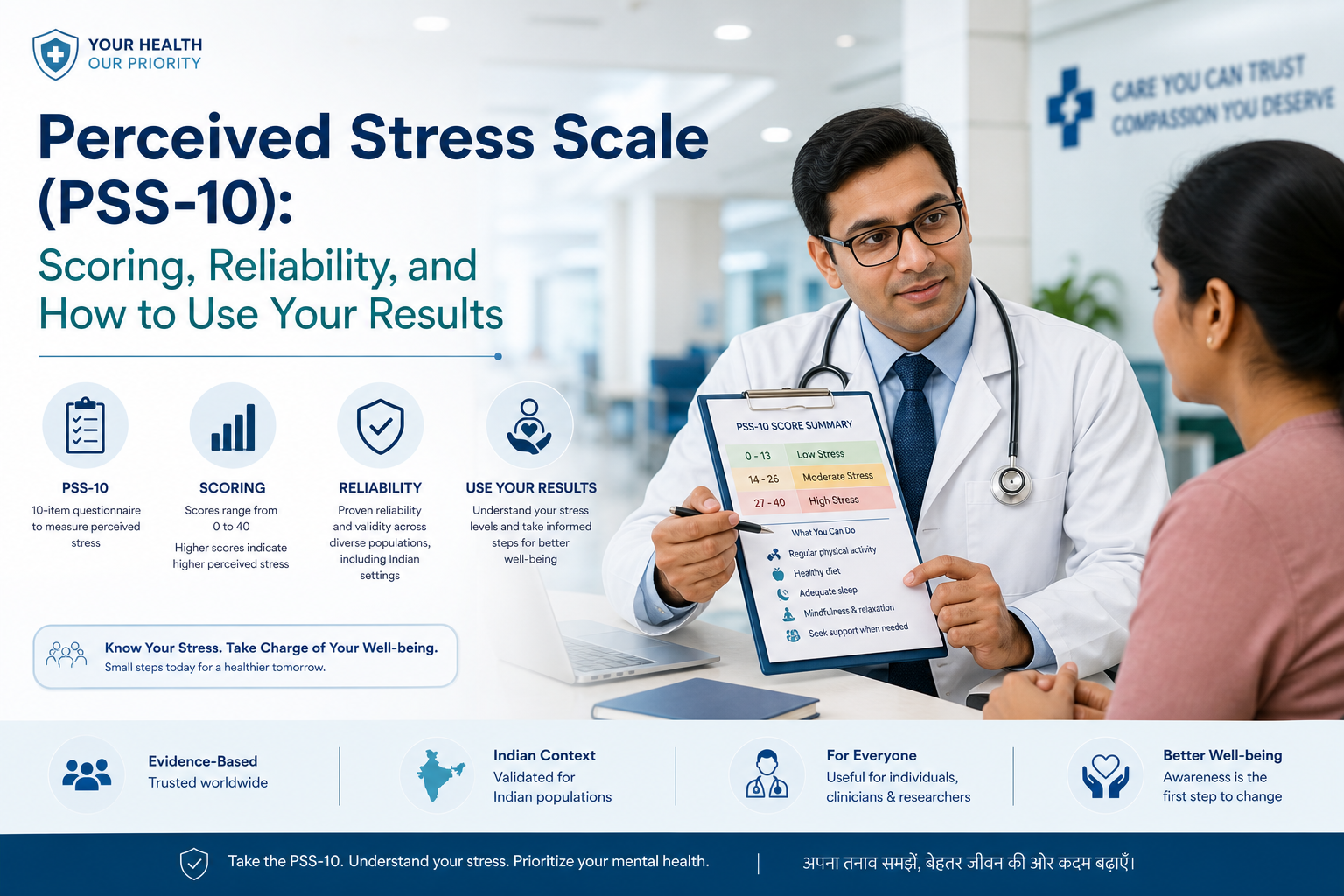
- Scores are summed for a total range of 0–40, where higher numbers reflect higher perceived stress.
Typical interpretation ranges used in many programs are:
- 0–13: Low perceived stress
- 14–26: Moderate perceived stress
- 27–40: High perceived stress
These ranges are guidelines, not diagnoses. The meaning of your stress score can vary by age, culture, and context. What’s most useful is comparing your own scores over time and noticing trends.
How to Take the PSS-10 (Step-by-Step)
- Find a quiet moment without distractions. The PSS takes 2–3 minutes.
- Answer based on the past month, not the last year or just today.
- Be honest. There are no right or wrong answers—accuracy helps you the most.
- Review your total and note which items were highest. These point to where pressure feels greatest (control, unpredictability, overload).
For convenience and quick scoring, many people take the PSS-10 online. Prefer a one‑page assessment? Consider a validated PSS test that instantly calculates your total and offers next steps.
What Your Score Means—and What to Do Next
If your score is low (0–13)
Great news: your perceived stress is generally manageable. Maintain your habits and consider occasional check-ins (every 4–8 weeks) or during big life changes. Keep practicing the basics that protect you: sleep, movement, boundaries, and social connection.
If your score is moderate (14–26)
Moderate stress is common during busy seasons. It’s a good time to make targeted adjustments and recheck in 2–4 weeks. Useful steps include scheduling short breaks, reducing cognitive load (to-do lists, reminders), and practicing brief relaxation techniques (such as 4–7–8 breathing).
If your score is high (27–40)
High perceived stress suggests your coping system is overloaded. Consider a focused plan: lighten commitments, delegate, and set clearer boundaries. If stress disrupts sleep, mood, or daily functioning, talk with a healthcare professional or therapist. If you’re having thoughts of self-harm, seek urgent support.
How Often Should You Retest?
Because the PSS reflects the past month, many people retest monthly or after a significant routine change—new job schedule, starting therapy, or adding exercise. If you’re actively making changes, a 2‑week interval can help you see early trends. A shift of several points is often noticeable in day-to-day life, but remember: trends across time matter more than one isolated number.
Benefits and Limitations of the PSS-10
Benefits
- Fast and sensitive: A minute or two reveals how overwhelmed or in-control you’ve felt recently.
- Action-guiding: Patterns in your answers highlight specific areas to target (control, predictability, overload).
- Trackable: A straightforward stress screening measure you can repeat to see what’s working.
Limitations
- Not a diagnosis: The PSS is a screening and monitoring tool. It doesn’t diagnose anxiety, depression, or medical disorders.
- Subjective: It captures perception. Two people under similar circumstances may report different stress levels.
- Context matters: Recent events (exams, deadlines) can temporarily spike scores—use trends and context to interpret results.
Evidence-Based Ways to Lower Your Perceived Stress
Use your PSS‑10 results to build a practical plan. Here are science-informed strategies that help many people reduce stress and improve well-being.
- Sleep anchors: Keep a consistent sleep and wake time. Protect the hour before bed (dim light, no doomscrolling). Even a 15‑minute improvement can help.
- Breathing drills: Try 4–7–8 breathing or physiological sighs (two quick nasal inhales, one long exhale) for 1–2 minutes to calm the nervous system.
- Movement snacks: Brief activity (a 10‑minute walk or 30 bodyweight squats) reduces muscle tension and boosts mood.
- Reduce cognitive load: Externalize memory (to‑do lists, calendars) so your brain isn’t juggling everything.
- Boundaries and batching: Group similar tasks and set response windows for email/messages. Protect focus time.
- Caffeine and media hygiene: Delay caffeine 60–90 minutes after waking, limit late‑day intake, and curate your news/social feeds.
- Micro-restoratives: Short breaks in nature, 5 minutes of stretching, or mindful pauses throughout the day.
- Talk it out: A supportive conversation can reframe challenges and restore a sense of control.
Track Progress with a Simple Digital Tool
Stress changes with seasons, projects, and life events. Tracking your numbers helps you notice early warning signs and celebrate wins. Many people use a weekly or monthly check-in with a stress calculator to monitor their stress score and keep their plan on track. If you prefer to measure stress online, choose a simple workflow you’ll actually use—quick tests, instant feedback, and easy comparisons over time.
Is the PSS Right for You?
If you’re looking for a quick, research-backed way to reflect on your recent stress and guide next steps, the PSS‑10 is an excellent starting point. It works both as a personal check-in and as part of a broader wellness, coaching, or clinical plan. While it isn’t a clinical diagnosis, it’s a reliable early signal and a useful compass for change.
FAQs About the Perceived Stress Scale (PSS-10)
1) What exactly does the PSS-10 measure?
The PSS‑10 measures your perception of stress over the last month—specifically how unpredictable, uncontrollable, and overloaded your life has felt. It is a validated mental health tool for stress assessment and monitoring.
2) Is the PSS-10 a diagnostic test?
No. The PSS‑10 is a screening and tracking measure, not a diagnosis. If your stress impacts sleep, work, or relationships, or you have persistent low mood or anxiety, talk with a qualified professional.
3) What is a normal score?
General guidance often uses 0–13 (low), 14–26 (moderate), and 27–40 (high). However, scores can vary by population and life context. Your own trends over time are most informative.
4) How reliable is the PSS-10?
The PSS‑10 shows good internal consistency and test‑retest reliability in research across many groups. It’s sensitive to changes after interventions like mindfulness training, exercise, or therapy.
5) How often should I repeat the PSS-10?
Monthly works well for many people. If you’re making active changes (sleep routine, therapy, workload adjustments), consider every 2–4 weeks to see trends.
6) Can my score change quickly?
Yes. Stress is dynamic. Major deadlines, travel, or illness can temporarily raise scores. That’s why tracking over time is powerful—it reveals patterns rather than one‑off spikes.
7) How can I use results to reduce stress?
Identify your highest‑scoring items (e.g., feeling out of control) and pick strategies that target them—time-blocking to restore control, planning to reduce unpredictability, and support to lower overload. Recheck to see if your plan works.
Get Started
Understanding your perceived stress is the first step to improving it. Take a quick assessment, review your result, and choose one small action to try this week. Retest to see your progress and refine your plan.
Ready for a quick, research‑based check? Start here:
Take the Free Stress Calculator Test Now
Summary
The Perceived Stress Scale (PSS‑10) is a fast, validated way to understand how stressed you’ve felt in the last month. It provides a clear stress score you can use to guide decisions, track progress, and evaluate stress management strategies. Whether you’re navigating a busy season or building long‑term resilience, a simple, consistent check-in can make all the difference.