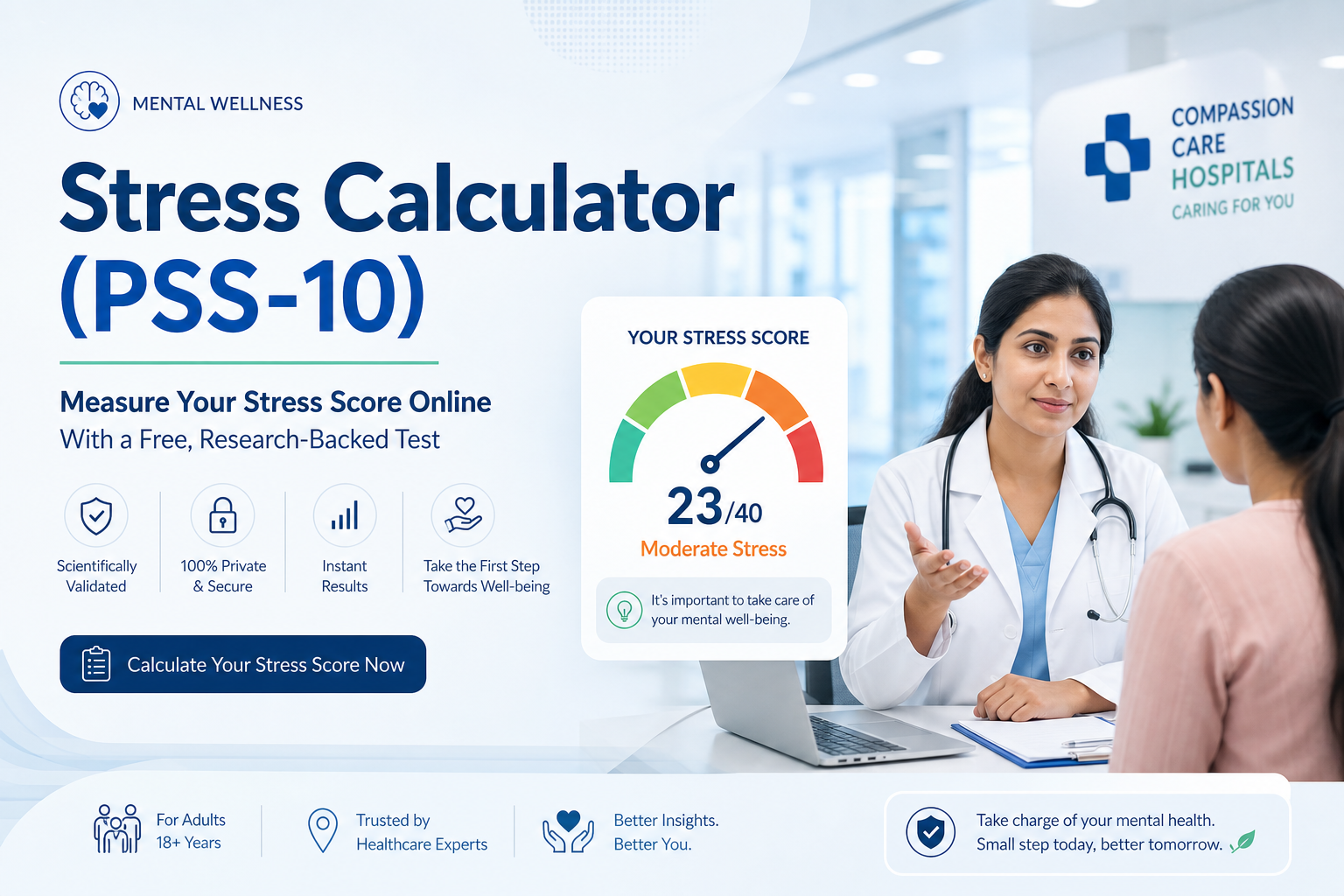
Understand Your Stress Score With the PSS-10
Stress touches nearly every part of life—from your sleep and focus to your mood and physical health. If you’ve noticed more irritability, headaches, tension, or trouble concentrating, getting a clear read on your current stress level can help you act early. A fast, evidence-based way to do that is with a stress calculator grounded in the Perceived Stress Scale (PSS-10), the most widely used psychological instrument for assessing how stressful you find life’s situations.
What Is the Perceived Stress Scale (PSS)?
The Perceived Stress Scale (PSS) is a validated questionnaire developed by Sheldon Cohen and colleagues to capture how unpredictable, uncontrollable, and overloaded you feel your life has been during the past month. The PSS-10 version includes 10 questions rated on a 5-point scale from 0 (never) to 4 (very often). Four items are positively worded and are reverse-scored before calculating your total. The final stress score ranges from 0 to 40, with higher scores suggesting higher perceived stress.
- Score range: 0–40
- Common interpretation: 0–13 (low), 14–26 (moderate), 27–40 (high)
- Time frame: Reflects your past month
Because the PSS focuses on your perception of stress, it captures the real-time pressure you feel, even if your external situation hasn’t objectively changed. That makes it a powerful mental health tool for self-awareness, early detection, and tracking progress.
Why Use a PSS-10–Based Online Tool?
An online assessment is quick, private, and informative. With a research-backed instrument, you can take a stress calculator in minutes and use your results to guide next steps. Benefits include:
- Speed and clarity: A straightforward questionnaire yields an easy-to-understand total.
- Tracking over time: Retaking the test every few weeks shows whether your strategies are working.
- Motivation: A number focuses attention and makes change feel measurable.
- Early action: Spot rising stress before it disrupts sleep, immunity, or decision-making.
Remember: the PSS is a screening instrument. It does not diagnose anxiety, depression, or medical conditions. Instead, it complements professional care and personal strategies for stress management.
How the PSS-10 Is Scored (In Plain Language)
The test asks how often you’ve felt a certain way in the last month. You pick from never (0) to very often (4). Some questions reflect resilience or control; those are reverse-scored so higher totals truly represent higher perceived stress. Your answers are summed to a total score out of 40.
Typical guideposts used in research and clinical settings are:
- 0–13 (Low): You’re handling current demands relatively well. Maintain healthy routines.
- 14–26 (Moderate): Your stress is elevated. Consider targeted strategies and monitor your trend.
- 27–40 (High): Your stress is high. Prioritize support, problem-solving, and, if needed, professional help.
These ranges are general—not a diagnosis. Your personal context matters (recent loss, caregiving, job changes, exams, etc.).
Who Should Consider an Online Stress Check?
A quick stress level test is useful if you:
- Feel “on edge” or overwhelmed most days
- Notice sleep problems, irritability, or racing thoughts
- Struggle to concentrate or make decisions
- Experience frequent headaches, GI discomfort, or muscle tension
- Are starting or adjusting a wellness plan and want a baseline
It’s also helpful during high-pressure periods (finals, deadlines, caregiving, financial strain) to decide what support you need.
What to Do Before You Start
To get the most accurate snapshot:
- Find a quiet spot and take a minute to breathe slowly.
- Think about the past 30 days—not just today.
- Answer honestly; there are no right or wrong answers.
Take a Validated Test in Minutes
If you’re ready to begin, you can use a secure, straightforward option. Try this stress calculator based on the PSS-10 to get your score and next steps. Many people prefer a free stress test they can complete privately, anytime, from any device.
PSS-10 vs. Other Options
There are many wellness quizzes online, but not all are validated. A PSS-based tool anchors your results in peer-reviewed research used worldwide. If you prefer to explore further, the PSS exists in multiple lengths, with the 10-item version most common for quick, repeatable checks. You can also look for tools that clearly label themselves as a PSS test or let you complete the PSS-10 online so you know the framework behind your score.
How to Use Your Stress Score
Once you have your total, treat it like a dashboard light:
- Low (0–13): Keep doing what works. Maintain sleep, movement, and connection. Plan for upcoming stressors proactively.
- Moderate (14–26): Choose 2–3 targeted actions (see tips below) and retest in 2–4 weeks to track progress.
- High (27–40): Create a short-term plan today. Consider talking with a clinician, adjusting workload if possible, and enlisting social support. Retest in 1–2 weeks after changes.
Evidence-Informed Ways to Lower Stress
Use your score to guide practical steps. These approaches have support in the stress and behavioral science literature:
- Breathing and grounding: 4-6 breathing (inhale 4, exhale 6) or physiological sighs for 1–3 minutes to reduce acute arousal.
- Sleep anchors: Fixed wake time, sunlight within an hour of waking, and a 30–60 minute wind-down with screens off.
- Movement: 20–30 minutes of moderate activity most days (walking, cycling, dancing) stabilizes mood and improves resilience.
- Stimulus audit: Reduce late caffeine, batch notifications, and set tech “off ramps” at night.
- Time design: Use time-blocking and 90-minute focus sprints separated by brief breaks.
- Cognitive skills: Noticing thinking traps and reframing with CBT-style questions (What evidence supports this? What’s a more balanced view?).
- Connection and support: Share specific needs with one trusted person. Social support buffers physiological stress responses.
- Micro-recovery: 5–10 minute “reset” walks, stretching, or guided mindfulness between tasks to prevent cumulative overload.
- Boundaries: Clarify start/stop times and limit “yes by default” to protect recovery time.
Pair one quick win (like 2 minutes of breathing before meetings) with one structural change (like consistent bed/wake times). Small, repeatable actions beat complex plans.
How Often Should You Recheck?
For most people, monthly is a reasonable cadence. If your score is high or you’re making active changes, retesting every 1–2 weeks helps you see whether your stress reduction plan is working. Regular self-guided stress screening promotes accountability and early course correction.
Privacy, Reliability, and What to Look For
When you measure stress online, choose tools that:
- Clearly state they use a validated instrument like the PSS-10
- Provide transparent scoring and plain-language interpretation
- Offer practical guidance and resources after your result
- Respect your privacy; review their privacy policy before submitting information
Validated tools are an important stress assessment resource, but they are not a replacement for clinical evaluation, especially when symptoms are severe or persistent.
When to Seek Professional Support
Contact a licensed clinician or your primary care provider if you notice any of the following:
- Stress feels unmanageable most days for 2+ weeks
- Significant sleep disruption, panic attacks, or persistent physical symptoms
- Stress is impairing work, school, caregiving, or relationships
- Thoughts of self-harm or hopelessness—seek urgent help immediately
If you’re in crisis or thinking about harming yourself, call your local emergency number right now. In the U.S., you can dial or text 988 for the Suicide & Crisis Lifeline; resources vary by country.
FAQs
What is the difference between the PSS-10 and other stress quizzes?
The PSS-10 is a validated, research-backed measure of perceived stress. Many generic quizzes lack scientific grounding. With the PSS-10, your score has recognized meaning and can be compared over time.
Is the PSS-10 a diagnosis?
No. It’s a stress screening tool, not a diagnostic test. It indicates how stressed you feel over the past month. If your score is high or your symptoms are disruptive, consider a professional evaluation.
What does my stress score mean for my health?
A higher score suggests higher perceived stress, which can affect sleep, immunity, pain, and mood. While one score isn’t destiny, tracking your score helps you notice trends and take targeted action sooner.
How long does the test take?
Most people finish in 2–4 minutes. Because it’s brief and reliable, it’s practical to repeat as your situation changes.
Can I use the results to create a plan?
Yes. Use your baseline to choose 2–3 actions (sleep, exercise, mindfulness, workload adjustments) and retest in a few weeks. If stress remains high, add support or consult a clinician.
Is it okay to take the test more than once?
Absolutely. The tool is designed for repeat measurement, making it a useful mental health tool for ongoing stress management.
What if my score is high but I feel fine?
Scores reflect your reported perception. Review your responses and context. Consider retesting in a week and monitoring sleep, irritability, and focus. If the score stays high, explore preventive steps.
Ready to Get Your Score?
A fast, research-backed check can help you turn uncertainty into a plan. Start with a trusted PSS-10–based assessment you can take from any device, then use your results to choose smart, sustainable changes.
Take the Free Stress Calculator Test Now
Next Steps After You Test
- Record your score and the date to build a simple progress log.
- Pick two actions you can sustain this week (for example, 10-minute walks at lunch and a 30-minute wind-down before bed).
- Share selectively with a friend or clinician if you want accountability or guidance.
- Retest on a schedule (weekly for high stress; monthly for maintenance).
Bottom Line
Stress is part of life, but it doesn’t have to run your life. A brief, science-based check-in using a PSS-10 framework turns a vague feeling into clear data—and clear data drives better decisions. If you’re ready to start, try a reliable stress calculator, take note of your score, and choose one small change today. Your future self will thank you.