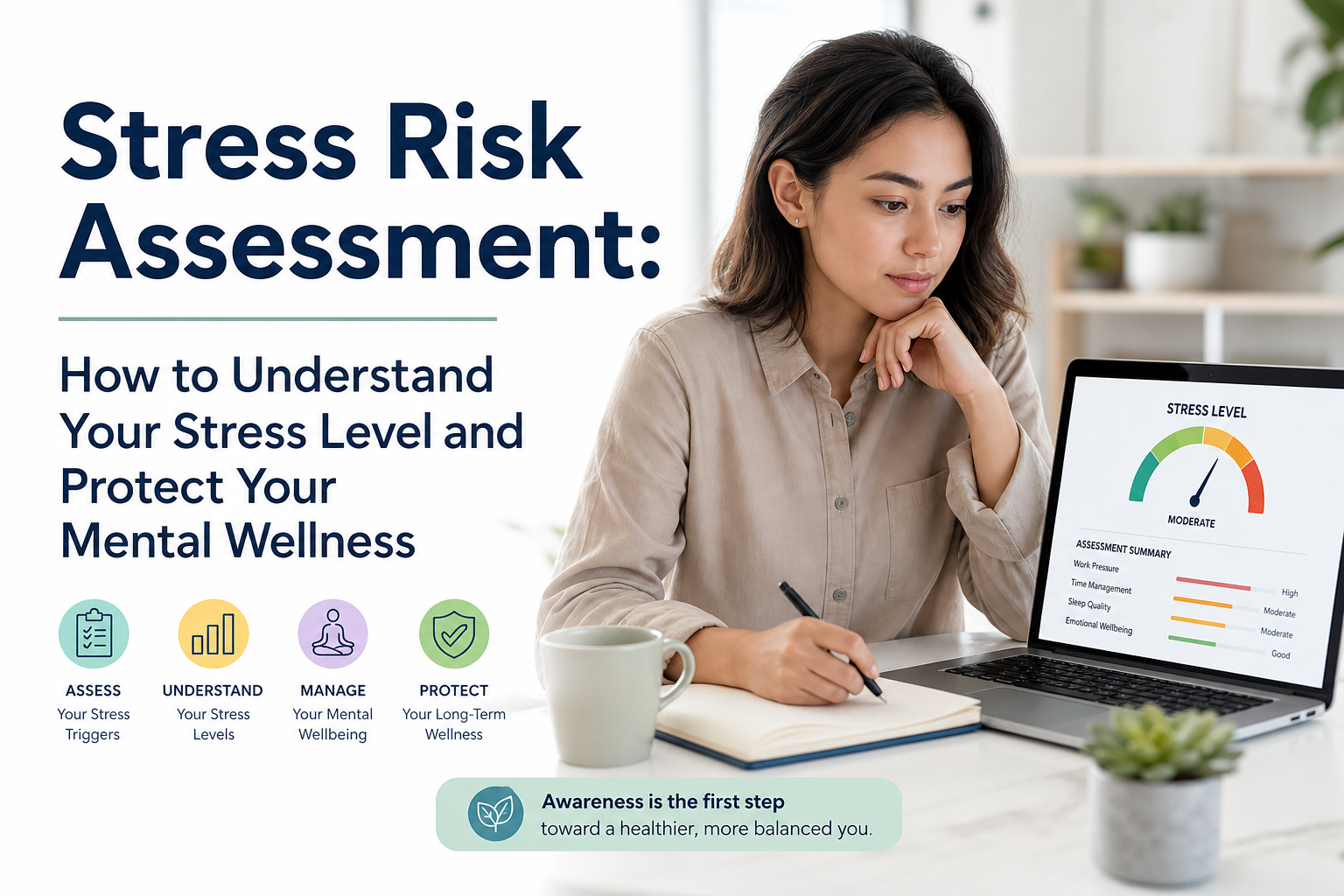
Stress is not always easy to measure. Some people look calm on the outside while feeling overwhelmed internally. Others may normalize exhaustion, irritability, poor sleep, or racing thoughts because life feels “busy.” A stress risk assessment helps you pause, reflect, and better understand how stress may be affecting your emotional wellbeing, daily functioning, and mental wellness.
While no online tool can diagnose a medical or mental health condition, a structured stress assessment can help you recognize patterns, identify risk factors, and take practical steps toward healthier coping. When used thoughtfully, stress screening can be an important first step in prevention, self-awareness, and resilience building.
What Is a Stress Risk Assessment?
A stress risk assessment is a structured way to evaluate how much stress you are experiencing and how it may be influencing your thoughts, emotions, body, and behavior. It often includes questions about perceived stress, workload, sleep quality, emotional regulation, social support, lifestyle habits, and coping strategies.
Unlike a casual “How stressed am I?” check-in, a stress assessment encourages you to look at stress from several angles. It may consider:
- How often you feel overwhelmed or unable to control important things
- Whether stress is affecting your sleep, focus, energy, or relationships
- Your current coping strategies and whether they are helping
- Signs of burnout, emotional fatigue, or reduced resilience
- Lifestyle factors such as physical activity, caffeine, alcohol, nutrition, and screen time
The goal is not to label you. The goal is to help you understand your stress load and make informed decisions about stress management.
Why Stress Awareness Matters
Stress is a normal human response. In short bursts, it can improve alertness and performance. The problem begins when stress becomes chronic, intense, or poorly managed. Over time, ongoing stress may contribute to headaches, digestive discomfort, muscle tension, sleep disruption, irritability, low motivation, and difficulty concentrating.
Stress awareness matters because many people do not realize how much pressure they are carrying until symptoms become disruptive. A stress level test or stress screening tool can provide a clearer snapshot of your current emotional state and help you take action earlier.
Early awareness supports better decisions, such as adjusting workload, improving boundaries, strengthening support systems, and using evidence-based coping strategies before stress becomes harder to manage.
How the Perceived Stress Scale Supports Stress Screening
One widely recognized concept in stress research is perceived stress. This refers to how unpredictable, uncontrollable, or overloaded life feels to you. Two people can face similar life events but experience very different stress levels depending on resources, mindset, support, and coping capacity.
The Perceived Stress Scale, often called the PSS test, is commonly used to assess perceived stress. The PSS-10 online format includes 10 questions that ask how often you have felt certain ways during the past month. It does not diagnose a condition, but it can help you reflect on your current stress burden.
Using a PSS-10 online stress screening tool can be useful if you want a quick, structured way to understand your perceived stress and decide whether you need lifestyle changes, additional support, or professional guidance.
Common Signs You May Need a Stress Assessment
Stress affects people differently. Some signs are physical, while others are emotional or behavioral. Consider taking a stress risk assessment if you regularly notice:
- Feeling tense, restless, or constantly “on edge”
- Frequent headaches, jaw clenching, or muscle tightness
- Changes in sleep, appetite, or energy levels
- Difficulty concentrating or making decisions
- Feeling emotionally drained, numb, or easily irritated
- Withdrawing from friends, family, or enjoyable activities
- Using alcohol, food, scrolling, or overworking to cope
- A sense that daily responsibilities feel unmanageable
These signs do not automatically mean something is seriously wrong, but they are worth paying attention to. Stress is easier to manage when you respond early rather than waiting until burnout sets in.
Key Factors That Influence Stress Risk
Workload and Role Pressure
High demands, unclear expectations, long hours, job insecurity, and lack of control can increase stress risk. Even meaningful work can become overwhelming without recovery time and healthy boundaries.
Sleep and Recovery
Poor sleep reduces emotional regulation and makes everyday problems feel harder. Consistent sleep routines, reduced late-night screen exposure, and regular wind-down habits can support resilience.
Social Support
Supportive relationships are one of the strongest buffers against stress. Talking with trusted people can reduce emotional load, improve perspective, and remind you that you do not have to manage everything alone.
Lifestyle Habits
Movement, nutrition, hydration, and time outdoors all affect stress response. Small lifestyle improvements can make stress management more effective, especially when practiced consistently.
Coping Style
Coping strategies can either reduce or increase stress over time. Problem-solving, relaxation, journaling, and reaching out for support tend to be more helpful than avoidance, rumination, or self-criticism.
Evidence-Based Stress Management Strategies
Once you understand your stress level, the next step is action. Evidence-based stress management does not require a complete life overhaul. Often, small consistent changes make the biggest difference.
1. Practice Brief Breathing Exercises
Slow breathing can help calm the nervous system. Try inhaling for four seconds, exhaling for six seconds, and repeating for two to five minutes. This simple practice may reduce tension and improve emotional control.
2. Use Cognitive Reframing
Stress often increases when thoughts become extreme, such as “I can’t handle this” or “Everything is falling apart.” Reframing does not mean pretending things are fine. It means asking, “What is one next step?” or “What evidence do I have?”
3. Build Micro-Recovery Into Your Day
Short breaks can prevent stress from accumulating. Step away from your screen, stretch, drink water, or take a five-minute walk. Recovery works best when it is built into the day, not saved only for weekends.
4. Strengthen Boundaries
Healthy boundaries protect attention and energy. This may include limiting after-hours work, saying no to nonessential commitments, or creating technology-free time before bed.
5. Move Your Body Regularly
Physical activity supports mood, sleep, and stress regulation. You do not need intense workouts to benefit. Walking, cycling, yoga, or light strength training can all support mental wellness.
6. Seek Support When Needed
If stress feels persistent, unmanageable, or connected with anxiety, depression, trauma, or thoughts of self-harm, professional support is important. A licensed mental health professional can provide personalized guidance. If you are in immediate danger or may harm yourself, contact emergency services or a crisis hotline in your area.
How Often Should You Take a Stress Level Test?
There is no single rule, but many people find it helpful to check in monthly, during major life changes, or whenever symptoms increase. A stress calculator or mental health tool can help you track patterns over time rather than relying on memory alone.
For example, you might take a stress level test at the start of each month and note what was happening in your life. Over time, this can reveal triggers, protective habits, and situations that require better boundaries or support.
Using Stress Assessment Results Wisely
A stress risk assessment is most helpful when you treat the results as information, not a final verdict. If your stress score is low, continue practicing habits that support emotional wellbeing. If your score is moderate or high, use it as a signal to adjust your routines and consider additional support.
Ask yourself:
- What are my top three stressors right now?
- Which stressors can I influence, reduce, or delegate?
- What coping strategies are helping, and which are not?
- Who can I talk to for support or perspective?
- What small change can I make this week?
This approach turns stress screening into practical self-care rather than another source of worry.
FAQ: Stress Risk Assessment
What is the purpose of a stress risk assessment?
A stress risk assessment helps you understand your current stress level, identify possible warning signs, and choose healthier coping strategies. It is a self-awareness tool, not a medical diagnosis.
Is an online stress calculator accurate?
An online stress calculator can provide useful insight when based on structured questions, such as perceived stress measures. However, it should be used as guidance, not as a replacement for professional evaluation.
What is the Perceived Stress Scale?
The Perceived Stress Scale is a well-known questionnaire that measures how unpredictable, uncontrollable, and overloaded your life has felt recently. The PSS-10 is a common 10-question version.
How do I know if my stress level is too high?
Your stress may be too high if it regularly affects sleep, mood, concentration, relationships, work, or physical comfort. If stress feels unmanageable or persistent, consider speaking with a qualified professional.
Can stress management improve emotional wellbeing?
Yes. Consistent stress management practices such as exercise, sleep routines, breathing exercises, social support, and healthy boundaries can support emotional wellbeing and resilience.
How often should I complete a stress assessment?
You can complete a stress assessment monthly, during major life transitions, or whenever you notice increased stress symptoms. Tracking results over time can help you spot patterns.
Conclusion: Make Stress Awareness Part of Your Mental Wellness Routine
A stress risk assessment is a practical way to understand how stress is affecting your mind, body, and daily life. It encourages awareness, supports better coping strategies, and can help you take action before stress becomes overwhelming.
If you are ready to better understand your stress patterns, start with a free stress level test for mental wellness and use your results as a guide for healthier habits, stronger boundaries, and more effective support. Your stress score is not your identity; it is information you can use to care for yourself with more clarity and confidence.
Take a few minutes today to assess your stress, reflect honestly, and choose one small step that supports your emotional health.