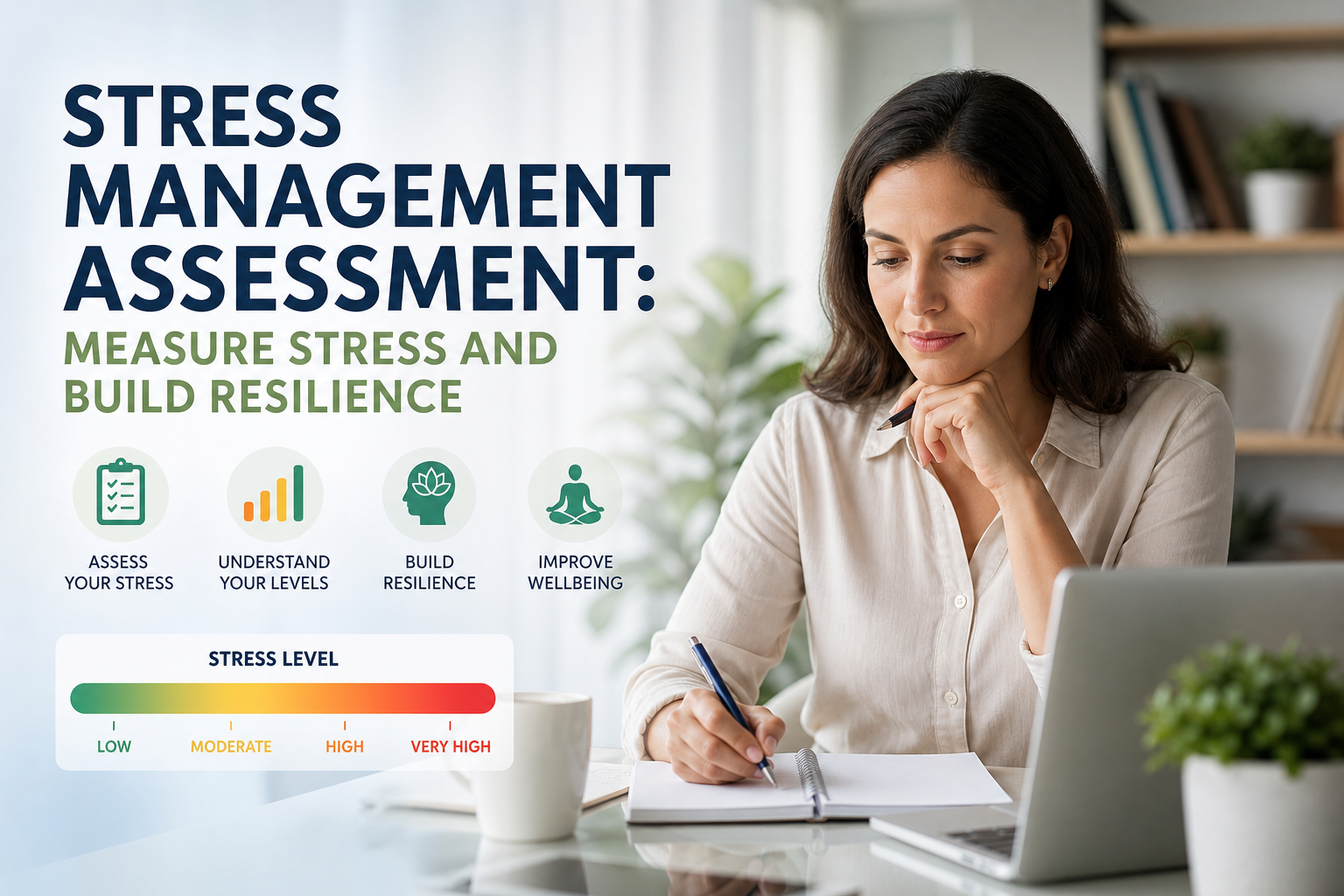
Stress Management Assessment: Measure Stress and Build Resilience
Stress is not always obvious while you are living through it. You may feel tired, irritable, distracted, or emotionally flat and assume it is just a busy season. A stress management assessment helps you pause, measure your perceived stress, and understand how daily pressure may be affecting your mental wellness, emotional health, sleep, relationships, and decision-making.
Using a structured stress management assessment can give you a clearer picture of your current stress level without guessing. It is not a diagnosis, and it does not replace professional care, but it can be a helpful first step toward awareness and healthier coping strategies.
What Is a Stress Management Assessment?
A stress management assessment is a self-reflection tool designed to help you evaluate how stress shows up in your thoughts, emotions, body, and behavior. It may ask about feelings of control, overwhelm, fatigue, sleep quality, irritability, concentration, and your ability to handle unexpected challenges.
Many evidence-informed tools are based on the idea of perceived stress. Perceived stress refers to how demanding, unpredictable, or uncontrollable life feels to you. Two people can experience the same situation and report very different stress levels because their resources, support systems, coping skills, and health history differ.
A good stress assessment does not label you as weak or unhealthy. Instead, it helps you notice patterns and take practical steps before stress becomes more disruptive.
Why Stress Awareness Matters for Mental Wellness
Stress is a normal biological response. In short bursts, it can help you focus, respond to danger, and meet deadlines. The problem is chronic stress. When pressure remains high for weeks or months, your nervous system may stay activated longer than it should.
Common signs of elevated stress may include:
- Feeling overwhelmed or unable to relax
- Frequent headaches, muscle tension, or stomach discomfort
- Changes in sleep, appetite, or energy
- Racing thoughts or difficulty concentrating
- Greater irritability, sadness, or anxiety
- Withdrawing from social support
- Relying more on alcohol, overeating, scrolling, or avoidance
Stress awareness gives you information you can act on. When you know your stress level, you can choose better coping strategies, set healthier boundaries, and seek support sooner when needed.
How the Perceived Stress Scale and PSS Test Fit In
One of the most widely known approaches to stress screening is the Perceived Stress Scale, often referred to as the PSS test. The PSS-10 is a 10-question version that asks how often you have felt certain ways during the past month, such as feeling unable to control important things or feeling confident about handling personal problems.
A PSS-10 online tool can be useful because it encourages consistent self-check-ins. The score can help you understand whether your stress appears low, moderate, or high based on your responses. However, it should be viewed as a mental health tool for awareness, not a medical diagnosis.
If you want a simple way to reflect on your current stress patterns, an online stress calculator can help you begin that process and decide which stress management steps may be most relevant for you.
What a Stress Level Test Can Reveal
A stress level test or stress screening can highlight areas of life that may be draining your emotional wellbeing. These may include work demands, financial pressure, caregiving responsibilities, relationship conflict, health concerns, lack of sleep, or limited recovery time.
Emotional patterns
Your responses may reveal frequent worry, frustration, low mood, emotional sensitivity, or a sense that you cannot switch off. These patterns are important because emotional stress often influences how you communicate, make decisions, and care for yourself.
Physical signals
Stress can affect the body through muscle tension, fatigue, digestive discomfort, increased heart rate, or disrupted sleep. A stress test can encourage you to connect these physical symptoms with lifestyle factors and daily pressure.
Coping habits
A stress assessment may also reveal whether your coping strategies are helping or adding to the problem. For example, exercise, journaling, social connection, and problem-solving may support resilience, while avoidance, isolation, and poor sleep habits may increase stress over time.
Evidence-Based Stress Management Strategies
Once you understand your stress level, the next step is to respond with practical, evidence-based stress management habits. You do not need a perfect routine. Small, consistent actions often make the biggest difference.
1. Name the stressor clearly
Write down what is causing the most pressure. Be specific. Instead of “work is stressful,” try “I have three deadlines and no clear priority.” Clarity makes problem-solving easier.
2. Use breathing to calm the nervous system
Slow breathing can support relaxation. Try inhaling for four seconds, exhaling for six seconds, and repeating for three to five minutes. This is not a cure-all, but it can help create space before reacting.
3. Strengthen your sleep routine
Sleep and stress influence each other. Aim for a consistent bedtime, reduce late-night screen use, limit caffeine later in the day, and create a wind-down routine that signals safety and rest.
4. Move your body regularly
Physical activity is one of the most reliable lifestyle tools for stress management. Walking, stretching, strength training, dancing, or cycling can help release tension and support mood.
5. Build social support
Resilience is not only an individual trait. Supportive relationships help buffer stress. Talk to someone you trust, join a community group, or consider professional counseling if stress feels unmanageable.
6. Set boundaries and reduce overload
Many people score high on a stress assessment because their schedule has no room for recovery. Practice saying no, renegotiating deadlines, delegating tasks, and protecting time for rest.
When to Seek Professional Support
A stress calculator or mental wellness assessment can help you understand patterns, but some situations require more support. Consider speaking with a licensed mental health professional, primary care clinician, or crisis resource if stress is interfering with daily life, causing persistent anxiety or low mood, affecting sleep severely, contributing to substance misuse, or leading to thoughts of self-harm.
Seeking help is not a failure. It is a responsible step toward emotional wellbeing and safety. Professional support can help you develop coping strategies tailored to your circumstances.
How Often Should You Take a Stress Management Assessment?
For many people, taking a stress management assessment once a month is a useful rhythm. It allows you to notice changes without becoming overly focused on scores. You may also want to take a stress screening during major life transitions, after a difficult period, or when you notice changes in mood, sleep, or energy.
Track your results alongside notes about what was happening in your life. Over time, you may see patterns. For example, your stress may rise when sleep drops, when work demands increase, or when you stop exercising. These insights can guide better choices.
FAQ: Stress Management Assessment
What is the purpose of a stress management assessment?
The purpose is to help you understand your perceived stress level, identify stress patterns, and choose healthier coping strategies. It is a self-awareness tool, not a diagnosis.
Is a stress calculator the same as a medical evaluation?
No. A stress calculator can support awareness and reflection, but it does not replace evaluation by a qualified healthcare or mental health professional.
What is the perceived stress scale?
The perceived stress scale is a research-based questionnaire that measures how unpredictable, uncontrollable, and overloaded life has felt recently. The PSS-10 is a commonly used 10-item version.
How accurate is an online stress test?
An online stress test can provide helpful insight if you answer honestly, but results should be interpreted as a guide. Your context, health, and life circumstances also matter.
Can a stress assessment improve emotional wellbeing?
It can help by increasing awareness and motivating action. Emotional wellbeing improves most when assessment is followed by supportive habits, coping skills, and professional help when needed.
What should I do if my stress level is high?
Start with basic supports: sleep, movement, breathing exercises, social connection, and reducing overload where possible. If stress feels persistent or unmanageable, seek professional guidance.
Conclusion
A stress management assessment is a practical way to understand how stress is affecting your mental wellness, emotional health, and daily functioning. By measuring perceived stress, reflecting on lifestyle factors, and choosing evidence-based coping strategies, you can build resilience one step at a time.
If you are ready to check in with yourself, use a free stress level test today and turn your results into a simple plan for better balance, healthier coping, and stronger emotional wellbeing.