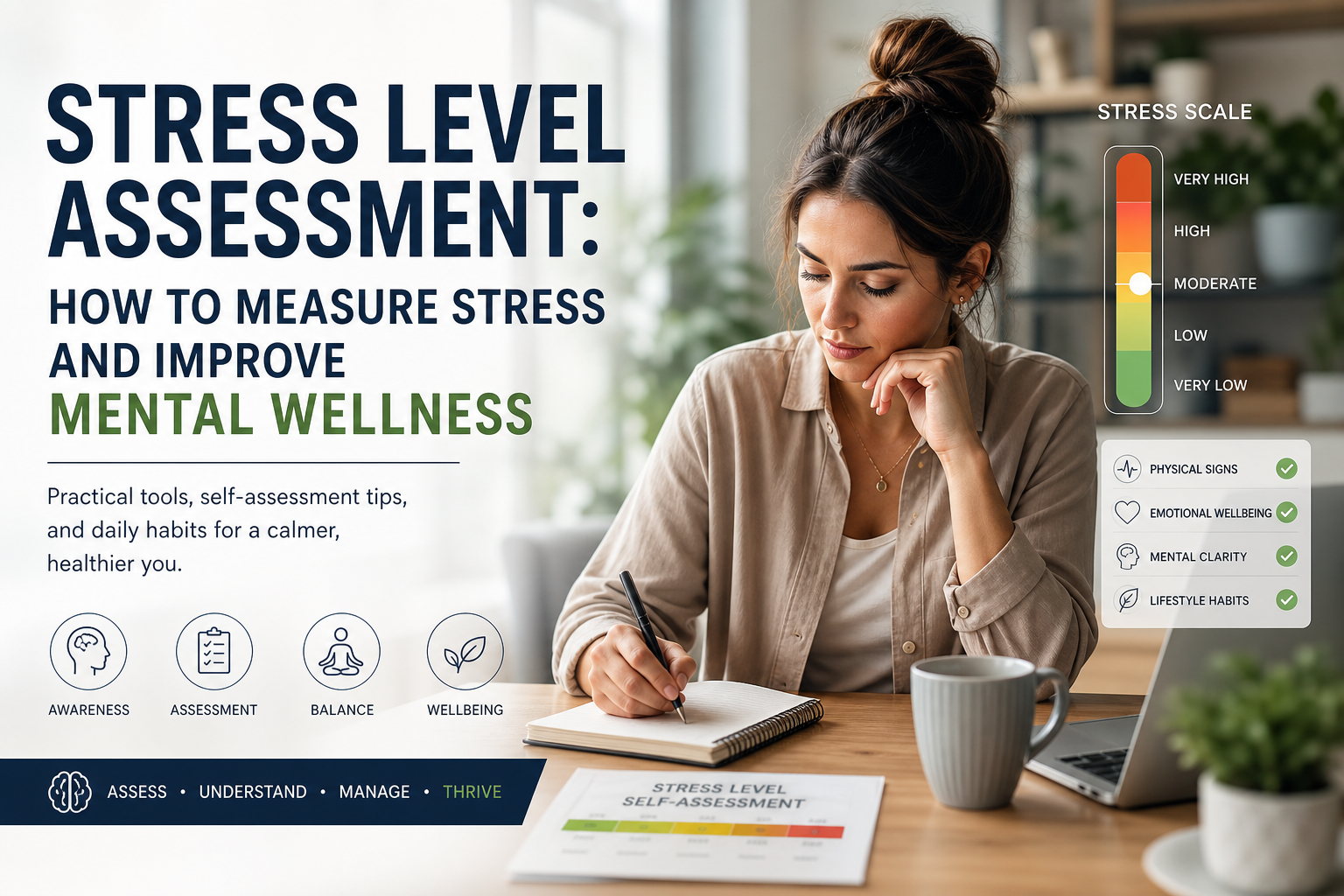
Stress Level Assessment: How to Measure Stress and Improve Mental Wellness
Stress is a normal part of life, but when it becomes persistent, intense, or difficult to manage, it can affect your emotional wellbeing, physical health, relationships, and daily performance. A stress level assessment helps you pause, reflect, and understand how much stress you may be experiencing right now.
Whether you are dealing with work pressure, family responsibilities, financial concerns, academic demands, or general uncertainty, assessing your stress can be a practical first step toward better mental wellness. You can begin with a simple free stress level test to gain insight into your current stress patterns and identify areas where support or lifestyle changes may help.
This guide explains how stress assessment works, what tools like the perceived stress scale measure, and which evidence-based stress management strategies can support resilience and emotional balance.
What Is a Stress Level Assessment?
A stress level assessment is a structured way to evaluate how stress is affecting your thoughts, feelings, behaviors, and daily functioning. It is not a medical diagnosis. Instead, it is a self-reflection tool that can help you recognize warning signs, track changes over time, and make more informed decisions about your wellbeing.
Common stress assessment methods may look at:
- How often you feel overwhelmed or unable to cope
- Whether daily demands feel manageable or out of control
- Changes in sleep, appetite, energy, or concentration
- Emotional patterns such as irritability, worry, sadness, or tension
- Physical symptoms such as headaches, muscle tightness, or fatigue
- Coping strategies you use during difficult periods
A stress calculator, stress test, or stress screening questionnaire can help organize these experiences into a score or category. While the score is useful, the real value comes from understanding what your answers reveal about your lifestyle, coping capacity, and emotional health.
Why Stress Awareness Matters
Many people normalize chronic stress until it starts affecting their health or relationships. Stress awareness gives you a chance to respond earlier. When you know your stress level, you can adjust your habits, set healthier boundaries, and seek help before burnout develops.
Unmanaged stress can contribute to:
- Poor sleep quality
- Difficulty concentrating
- Low motivation or emotional exhaustion
- Increased irritability or conflict
- Unhealthy coping behaviors
- Reduced resilience during challenges
Stress awareness is not about judging yourself. It is about noticing what is happening and responding with care. A regular stress level test can become part of a broader mental wellness routine, similar to tracking exercise, nutrition, or sleep.
How the Perceived Stress Scale Supports Stress Assessment
One of the most widely known tools in stress screening is the perceived stress scale. It focuses on how unpredictable, uncontrollable, and overloaded your life has felt during a recent period. Rather than measuring only external events, it explores how you perceive and respond to stress.
This matters because two people can experience the same situation very differently. One person may feel challenged but supported, while another may feel overwhelmed and depleted. Perceived stress reflects the relationship between life demands and your sense of coping ability.
What Is the PSS Test?
The PSS test is a self-report questionnaire designed to measure perceived stress. A common version is the PSS-10, which includes 10 questions about feelings and thoughts related to stress. A PSS-10 online tool may ask how often you have felt nervous, confident, in control, or unable to handle important things.
Using a PSS-10 online stress screening tool can be helpful if you want a structured snapshot of your current stress level. However, your result should be interpreted as guidance, not a diagnosis. If your stress feels severe, persistent, or connected to anxiety, depression, trauma, or thoughts of self-harm, it is important to contact a qualified mental health professional or emergency support service.
Signs You May Benefit From a Stress Level Assessment
You do not need to wait until you are in crisis to assess stress. In fact, regular check-ins can help prevent stress from building unnoticed. Consider using a stress assessment if you notice any of the following:
- You often feel tense, restless, or emotionally drained
- Your sleep has become irregular or unrefreshing
- You feel overwhelmed by tasks that used to feel manageable
- You are relying more on caffeine, alcohol, food, or avoidance to cope
- You have frequent headaches, stomach discomfort, or muscle tension
- You feel disconnected from hobbies, relationships, or personal goals
- You are experiencing reduced patience or increased irritability
These signs do not automatically mean you have a mental health condition. They may indicate that your mind and body need recovery, support, or a change in routine.
How to Interpret Your Stress Assessment Results
Most stress screening tools provide a score that falls into a general range, such as low, moderate, or high stress. While each tool may use different scoring methods, the interpretation usually follows a similar pattern.
Low Stress
A low score may suggest that your current coping strategies are working well. It does not mean life is stress-free, but it may indicate that you generally feel capable of handling daily demands. Continue maintaining healthy habits, supportive relationships, and realistic expectations.
Moderate Stress
A moderate score may mean stress is present and worth monitoring. You might be functioning, but with increased effort. This is a good time to strengthen coping strategies, improve sleep, reduce avoidable pressure, and create more recovery time.
High Stress
A high score may indicate that stress is significantly affecting your emotional wellbeing or daily life. Consider reaching out to a healthcare provider, counselor, therapist, or trusted support person. Professional support can help you explore causes, develop coping skills, and address any related concerns.
Evidence-Based Stress Management Strategies
Once you understand your stress level, the next step is action. Effective stress management does not require a complete life overhaul. Small, consistent changes can improve resilience and reduce the impact of stress over time.
1. Practice Slow Breathing
Slow breathing helps calm the body’s stress response. Try inhaling for four counts, exhaling for six counts, and repeating for two to five minutes. Longer exhales may support relaxation and reduce physical tension.
2. Improve Sleep Consistency
Sleep and stress are closely connected. Aim for a regular sleep schedule, limit late-night screen use, and create a wind-down routine. Even small improvements in sleep quality can support emotional regulation and mental clarity.
3. Move Your Body Regularly
Physical activity is one of the most reliable ways to reduce stress hormones and improve mood. Walking, stretching, cycling, dancing, yoga, or strength training can all help. Choose movement that feels realistic and enjoyable.
4. Strengthen Social Support
Connection is a protective factor for mental wellness. Talking with a friend, family member, mentor, or support group can reduce isolation and help you process challenges more clearly.
5. Use Problem-Focused Coping
When stress comes from practical demands, break the problem into smaller steps. Make a list, prioritize what matters most, delegate where possible, and set boundaries around your time and energy.
6. Practice Acceptance-Based Coping
Some stressors cannot be solved immediately. In those cases, acceptance-based strategies such as mindfulness, journaling, grounding exercises, or self-compassion can help you respond without becoming consumed by the situation.
Lifestyle Factors That Influence Stress Levels
Your stress score is shaped by more than major life events. Everyday habits can either increase pressure or build resilience. Pay attention to lifestyle factors such as:
- Nutrition: Regular meals and balanced nutrition support energy and mood stability.
- Caffeine intake: Too much caffeine may worsen jitters, sleep problems, or anxiety-like symptoms.
- Digital overload: Constant notifications and news exposure can keep the nervous system activated.
- Time boundaries: Overcommitment can lead to chronic pressure and reduced recovery time.
- Rest: Intentional downtime is not laziness; it is part of healthy stress recovery.
When making changes, start small. Choose one habit to improve this week rather than trying to fix everything at once. Sustainable stress management is built through repetition, not perfection.
When to Seek Professional Support
A mental health tool can support self-awareness, but it cannot replace professional care. Consider speaking with a licensed professional if stress is interfering with work, school, relationships, sleep, or basic daily functioning.
You should seek urgent support if you feel unsafe, have thoughts of harming yourself, or feel unable to cope. If you are in immediate danger, contact local emergency services or a crisis support line in your area.
FAQ About Stress Level Assessment
What is a stress level assessment?
A stress level assessment is a self-check tool that helps measure how much stress you are experiencing and how it may be affecting your emotions, thoughts, body, and daily life.
Is a stress calculator the same as a diagnosis?
No. A stress calculator or stress test can provide helpful insight, but it does not diagnose a medical or mental health condition. For diagnosis or treatment, consult a qualified professional.
How often should I take a stress level test?
You can take a stress level test during demanding periods or as a monthly wellness check-in. Tracking results over time may help you notice patterns and respond earlier.
What is the perceived stress scale?
The perceived stress scale is a questionnaire that measures how unpredictable, uncontrollable, and overwhelming life has felt recently. The PSS-10 is a commonly used version.
Can stress management reduce my score?
Healthy coping strategies, better sleep, regular movement, social support, and realistic boundaries may help reduce perceived stress over time. Results vary depending on your circumstances.
What should I do if my stress score is high?
If your score is high, review your stressors, increase support, and consider speaking with a counselor, therapist, or healthcare provider, especially if stress is affecting daily functioning.
Conclusion: Use Stress Level Assessment as a Starting Point
A stress level assessment is a practical way to understand your current mental and emotional load. It can help you recognize patterns, improve stress awareness, and choose coping strategies that support long-term resilience.
Your score is not a label. It is information. When used thoughtfully, a stress assessment can guide healthier decisions around rest, boundaries, movement, support, and emotional wellbeing.
If you are ready to better understand your stress, start with a simple mental wellness assessment and use your results as a foundation for positive change. Take a few minutes today to check in with yourself, reflect honestly, and choose one small action that supports your wellbeing.