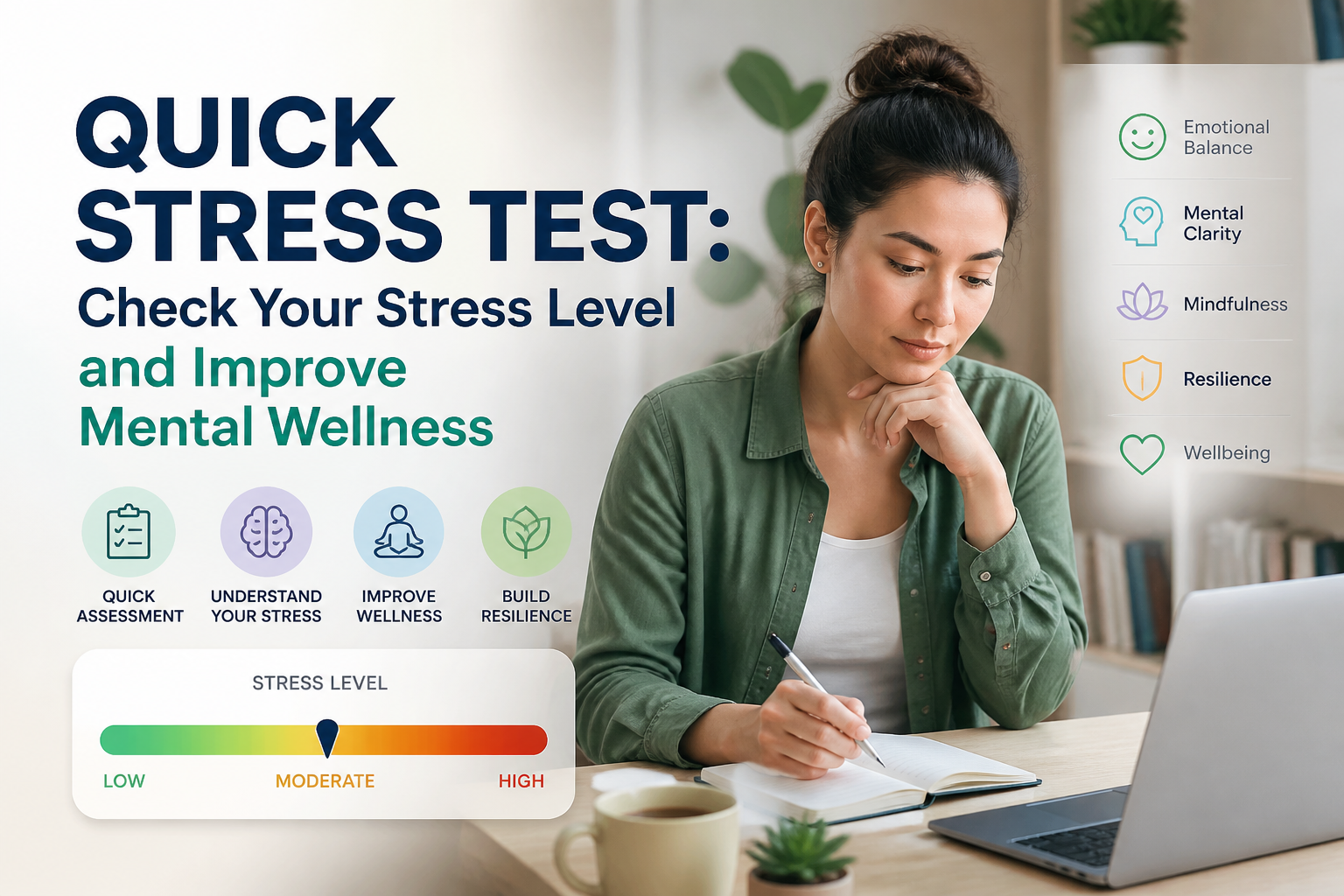
Quick Stress Test: Check Your Stress Level and Improve Mental Wellness
Stress is part of everyday life, but it can become harder to manage when pressure builds without awareness. A quick stress test can help you pause, reflect on your recent experiences, and better understand how stress may be affecting your emotional wellbeing, sleep, focus, relationships, and daily choices.
While no online tool can diagnose a mental health condition, a structured stress assessment can be a useful first step toward self-awareness. It helps you notice patterns, identify stress triggers, and decide whether you may benefit from healthier coping strategies or professional support.
What Is a Quick Stress Test?
A quick stress test is a short self-assessment designed to help you estimate your current stress level. It usually asks about thoughts, feelings, and behaviors over a recent period, such as the past week or month. Questions may explore whether you feel overwhelmed, in control, emotionally drained, easily irritated, or unable to relax.
Many stress screening tools are inspired by established concepts such as perceived stress. Perceived stress refers to how unpredictable, uncontrollable, or overloaded your life feels from your own perspective. This matters because two people can face similar situations but experience very different levels of emotional strain.
Why Stress Awareness Matters
Stress awareness is not about labeling yourself as “stressed” or “not stressed.” It is about understanding your body and mind before stress starts to affect your wellbeing more deeply. Unmanaged stress can influence mood, motivation, concentration, digestion, sleep quality, and even the way you communicate with others.
Common signs that your stress level may be rising include:
- Feeling tense, restless, or emotionally exhausted
- Difficulty sleeping or waking up tired
- Frequent headaches, muscle tightness, or stomach discomfort
- Feeling easily irritated or impatient
- Trouble focusing or making decisions
- Withdrawing from social contact
- Relying more on caffeine, alcohol, or comfort eating
Recognizing these signs early gives you more options. Instead of waiting until stress feels unmanageable, you can make small but meaningful adjustments to your routine, mindset, and support system.
How a Quick Stress Test Supports Mental Wellness
A quick stress test is not a replacement for therapy, medical advice, or a clinical evaluation. However, it can support mental wellness by giving you a clearer snapshot of how you are doing right now. Think of it as a mental health tool for reflection, not a diagnosis.
It Encourages Honest Self-Reflection
Many people move through stressful periods on autopilot. A stress level test invites you to slow down and ask, “How am I really coping?” That simple question can reveal whether your current habits are helping or adding pressure.
It Helps Identify Patterns
If you take a stress assessment regularly, you may notice patterns connected to work deadlines, financial pressure, family responsibilities, health concerns, or lack of rest. These patterns can guide better planning and healthier boundaries.
It Can Motivate Positive Action
Seeing a high stress score may encourage you to prioritize sleep, talk to someone you trust, practice relaxation techniques, or seek professional guidance. A lower score can also be helpful because it shows which coping strategies are working.
Understanding the Perceived Stress Scale and PSS Test
The perceived stress scale is one of the best-known frameworks for measuring how people perceive stress in their lives. The PSS test, especially the PSS-10 version, asks about feelings of control, confidence, overload, and emotional strain. A PSS-10 online stress screening tool can help users understand their stress response in a structured way.
The value of a PSS-style stress screening is that it focuses on your lived experience rather than only external events. This is important because stress is not just about what happens to you; it is also about how your mind and body respond to those demands.
When Should You Take a Stress Level Test?
You do not need to wait for a crisis to take a stress test. In fact, regular check-ins may be most useful when life is busy but still manageable. Consider taking a quick stress test when:
- You feel unusually overwhelmed or emotionally reactive
- Your sleep, appetite, or energy has changed
- You are facing major life transitions
- Work, school, caregiving, or finances feel difficult to manage
- You want to track your mental wellness over time
- You are beginning new stress management habits and want to monitor progress
If your stress feels intense, persistent, or connected with panic, depression, thoughts of self-harm, substance misuse, or inability to function, it is important to reach out to a qualified mental health professional, doctor, or emergency support service in your area.
Evidence-Based Stress Management Strategies
Once you understand your stress level, the next step is choosing practical coping strategies. Evidence-based stress management often combines lifestyle habits, emotional regulation, social support, and problem-solving.
1. Practice Slow Breathing
Slow, steady breathing can help calm the nervous system. Try inhaling for four seconds, exhaling for six seconds, and repeating for three to five minutes. This simple practice may reduce physical tension and help you think more clearly.
2. Improve Sleep Consistency
Sleep and stress strongly influence each other. Aim for a consistent sleep schedule, reduce screen exposure before bed, and create a wind-down routine. Even small improvements in sleep quality can support emotional resilience.
3. Move Your Body Regularly
Physical activity is one of the most reliable ways to manage stress. Walking, stretching, cycling, yoga, dancing, or strength training can help release tension and improve mood. Choose something realistic rather than perfect.
4. Use Problem-Solving Instead of Rumination
Rumination keeps the mind stuck on the same worries. Problem-solving asks, “What is one practical step I can take?” Write down the issue, list possible actions, choose one small step, and review the outcome.
5. Strengthen Social Support
Talking with a trusted friend, family member, mentor, or counselor can reduce emotional isolation. Supportive connection is a major protective factor for mental wellness and resilience.
6. Set Boundaries Around Demands
Stress often rises when every request feels urgent. Practice saying no when appropriate, protecting recovery time, and clarifying expectations at work or home. Boundaries are not selfish; they help preserve emotional wellbeing.
Building Resilience Over Time
Resilience does not mean ignoring stress or pretending everything is fine. It means developing the skills and support needed to recover, adapt, and keep going. A quick stress test can show you where you are today, but resilience grows through repeated daily choices.
Helpful resilience habits include:
- Keeping a realistic daily routine
- Taking breaks before exhaustion sets in
- Practicing gratitude or journaling
- Spending time outdoors when possible
- Reducing unnecessary digital overload
- Learning to ask for help earlier
Over time, these habits can make stress feel less overwhelming and help you respond with more clarity.
FAQ About Quick Stress Tests
Is a quick stress test accurate?
A quick stress test can provide a helpful estimate of your current stress level, especially when based on recognized stress assessment concepts. However, it is not a medical diagnosis.
How often should I take a stress test?
You can take a stress test monthly, during stressful periods, or whenever you notice changes in mood, sleep, focus, or emotional wellbeing.
What is the difference between a stress calculator and a PSS test?
A stress calculator may estimate stress using different questions or scoring methods. A PSS test is based on perceived stress and focuses on how overloaded or in control you have felt recently.
Can a stress level test tell me if I have anxiety or depression?
No. A stress level test can highlight stress patterns, but it cannot diagnose anxiety, depression, or any mental health condition. Speak with a qualified professional for evaluation.
What should I do if my stress score is high?
Start with basic coping strategies such as rest, breathing exercises, movement, and support from trusted people. If stress is severe, persistent, or interfering with daily life, seek professional help.
Is an online stress screening tool useful for workplace stress?
Yes, it can help you reflect on workload, boundaries, burnout risk, and coping strategies. It may also help you decide whether to discuss support or adjustments with a supervisor or HR professional.
Conclusion: Use a Quick Stress Test as a Starting Point
A quick stress test is a practical way to check in with yourself, understand your stress level, and take early steps toward better mental wellness. It is most useful when paired with honest reflection, healthy coping strategies, and support when needed.
If you want a simple way to begin, try a free stress level test for mental wellness and use your results as a guide for your next small step. Stress awareness is not about perfection; it is about noticing what your mind and body need before pressure becomes too heavy.
Call to action: Take a few minutes today to assess your stress, review your habits, and choose one evidence-based strategy that supports your emotional health. Small changes, repeated consistently, can make a meaningful difference.