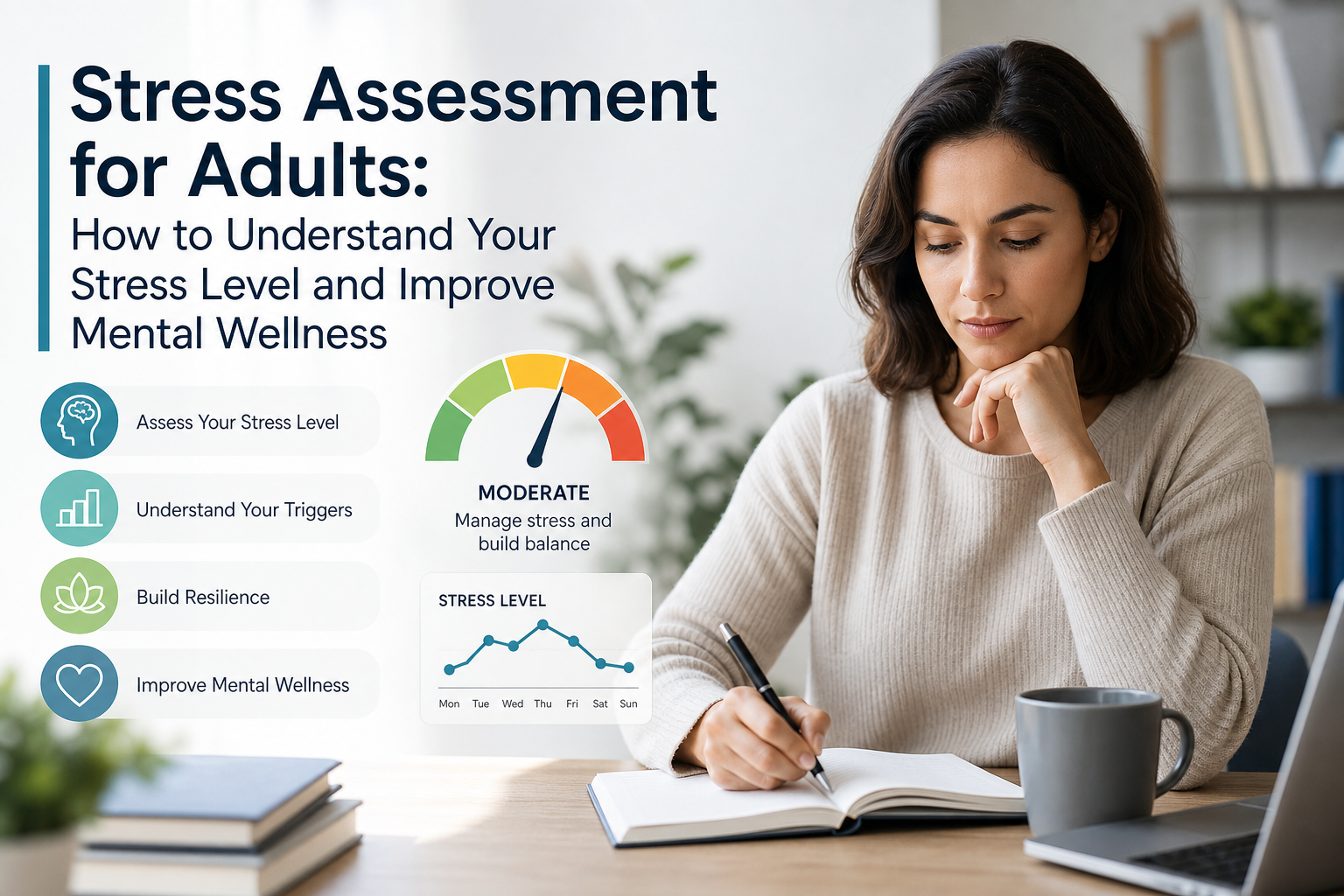
Stress Assessment for Adults: How to Understand Your Stress Level and Improve Mental Wellness
Stress is part of adult life, but it should not quietly take over your sleep, mood, focus, relationships, or physical wellbeing. A stress assessment for adults helps you pause, reflect, and understand how much pressure you may be carrying before it becomes harder to manage.
Whether stress comes from work, finances, caregiving, health concerns, or major life changes, measuring it can make your next steps clearer. Using an online stress calculator can be a practical starting point for noticing patterns, identifying risk factors, and building healthier coping strategies.
This guide explains how adult stress screening works, what tools like the perceived stress scale measure, and how to use your results to support emotional wellbeing without treating them as a medical diagnosis.
What Is a Stress Assessment for Adults?
A stress assessment is a structured way to evaluate how overwhelmed, tense, or unable to cope you have felt over a recent period. It usually asks about your thoughts, emotions, behaviors, and physical reactions to everyday demands.
For adults, stress can appear in many ways. Some people feel irritable or anxious. Others notice headaches, fatigue, muscle tension, poor concentration, or changes in appetite and sleep. A stress test or stress level test helps connect these symptoms to your current life pressures.
A good stress assessment does not label you as weak or broken. Instead, it gives you information. It can help you see whether your stress is manageable, elevated, or interfering with daily functioning.
Why Stress Awareness Matters for Adult Mental Wellness
Many adults normalize chronic stress because they are used to being busy. Over time, however, persistent stress may affect emotional health, decision-making, immune function, sleep quality, and relationships. Stress awareness helps you respond earlier rather than waiting for burnout.
Checking in with yourself regularly can support:
- Emotional wellbeing: recognizing irritability, sadness, worry, or emotional numbness.
- Better coping strategies: choosing healthier responses instead of relying on avoidance or overwork.
- Improved resilience: strengthening your ability to recover from setbacks.
- Work-life balance: identifying when responsibilities are exceeding your capacity.
- More informed conversations: knowing when to speak with a therapist, doctor, coach, or trusted support person.
Stress awareness is not about eliminating all pressure. Some stress can motivate action. The goal is to understand when stress becomes too frequent, intense, or difficult to recover from.
How Stress Assessments Work
Most stress screening tools ask questions about your recent experiences. You may be asked how often you felt unable to control important things, struggled to handle responsibilities, felt nervous, or believed that difficulties were piling up.
Your answers are typically scored to provide an estimated stress level. The result may fall into a range such as low, moderate, or high perceived stress. This can help you decide whether simple lifestyle adjustments may be enough or whether additional support would be helpful.
The Role of the Perceived Stress Scale
One widely known approach is based on the perceived stress scale, often called the PSS test. The PSS-10 is a commonly used 10-question version that explores how unpredictable, uncontrollable, and overloaded life has felt during the past month.
A PSS-10 online stress screening tool can help adults reflect on perceived stress in a consistent way. While it cannot diagnose anxiety, depression, or any medical condition, it may provide a useful snapshot of your current stress burden.
What a Stress Calculator Can and Cannot Tell You
A stress calculator can help you estimate your stress level and identify areas that may need attention. It can support self-awareness and encourage healthier choices.
However, it cannot replace professional evaluation. Stress symptoms can overlap with medical conditions, trauma responses, anxiety disorders, depression, sleep disorders, and other concerns. If your stress feels unmanageable, persists for weeks, or includes thoughts of self-harm, seek support from a qualified professional or emergency service right away.
Common Signs You May Need a Stress Level Test
You do not have to wait until you feel completely overwhelmed to complete a stress assessment. Consider taking a stress level test if you notice any of the following:
- You feel tense, rushed, or mentally overloaded most days.
- Your sleep is disrupted by worry or racing thoughts.
- You are more irritable, impatient, or emotionally reactive than usual.
- You rely more on caffeine, alcohol, food, screens, or avoidance to cope.
- Your productivity is dropping despite working longer hours.
- You feel disconnected from people or activities you usually enjoy.
- Your body feels constantly tired, tight, or run down.
These signs do not automatically mean something is seriously wrong. They are signals that your mind and body may need recovery, support, and better stress management habits.
Evidence-Based Stress Management Strategies for Adults
After a stress assessment, the next step is action. Research-supported stress management usually combines lifestyle changes, emotional regulation, practical problem-solving, and social support.
1. Build a Daily Recovery Routine
Adults often schedule responsibilities but forget to schedule recovery. Even short breaks can help reset your nervous system. Try a 10-minute walk, deep breathing, stretching, quiet reading, or stepping away from screens between tasks.
Consistency matters more than intensity. A small routine practiced daily is usually more effective than a major self-care plan that happens once a month.
2. Improve Sleep and Energy Habits
Sleep is one of the strongest foundations for resilience. Poor sleep can make stress feel more intense, while high stress can make sleep harder. Support better rest by keeping a regular bedtime, reducing late caffeine, dimming screens, and creating a wind-down ritual.
Nutrition and movement also play a role. Balanced meals, hydration, and regular physical activity can improve mood regulation and reduce physical tension.
3. Use Practical Coping Strategies
Effective coping strategies are not about pretending stress does not exist. They help you respond instead of react. Useful options include:
- Problem-solving: list what is controllable and choose one next step.
- Boundary-setting: say no, delegate, or renegotiate unrealistic expectations.
- Mindful breathing: slow your exhale to calm the body’s stress response.
- Journaling: write worries down to reduce mental clutter.
- Social connection: talk with someone who listens without judgment.
4. Strengthen Emotional Health Through Reflection
Stress often becomes heavier when emotions are ignored. Naming what you feel can reduce confusion and help you choose a response. Ask yourself: Am I anxious, angry, disappointed, grieving, overstimulated, or exhausted?
This type of reflection supports emotional wellbeing and helps you understand whether your stress is coming from workload, relationships, uncertainty, lack of control, or unmet needs.
5. Know When to Seek Professional Support
Self-help tools can be valuable, but they are not always enough. Consider reaching out to a licensed mental health professional, physician, or counselor if stress is interfering with work, relationships, sleep, physical health, or daily responsibilities.
You should seek urgent help if you feel unsafe, have thoughts of harming yourself, or believe you may harm someone else. Professional support is a sign of strength, not failure.
How Often Should Adults Take a Stress Assessment?
There is no single rule, but many adults benefit from checking their stress level monthly or during major life transitions. You might also reassess after starting a new routine, changing jobs, recovering from illness, or navigating family challenges.
Regular stress screening helps you track patterns. If your score remains elevated, it may be time to adjust your workload, improve recovery habits, or seek additional support.
How to Interpret Your Stress Assessment Results
Your score is best viewed as a guide, not a verdict. A low score may suggest that your current coping strategies are working well. A moderate score may indicate that stress is present and worth addressing before it escalates. A high score may suggest that your current demands exceed your coping resources.
Instead of focusing only on the number, ask:
- What situations are creating the most pressure?
- Which symptoms have changed recently?
- What support or boundaries would reduce the load?
- Which coping strategies have helped in the past?
- Do I need professional guidance?
This reflective approach turns a mental health tool into a practical plan for better stress management.
FAQ: Stress Assessment for Adults
What is the best stress assessment for adults?
The best stress assessment is one that is clear, evidence-informed, and easy to complete. Tools based on the perceived stress scale, such as a PSS-10 online assessment, are commonly used to measure perceived stress.
Is an online stress test accurate?
An online stress test can provide a helpful estimate of your current stress level, but it is not a diagnosis. Results should be used for self-awareness and, when needed, discussed with a qualified professional.
What is the perceived stress scale?
The perceived stress scale is a questionnaire designed to measure how unpredictable, uncontrollable, and overloaded you have found your life recently. The PSS-10 is a widely used 10-item version.
How do I know if my stress level is too high?
Your stress may be too high if it regularly affects sleep, mood, concentration, physical comfort, relationships, or daily responsibilities. A stress screening can help you decide whether more support is needed.
Can stress affect physical health?
Yes. Ongoing stress may contribute to fatigue, muscle tension, headaches, digestive discomfort, sleep problems, and other physical symptoms. Always consult a healthcare professional for persistent or concerning symptoms.
How can I reduce stress naturally?
Evidence-based habits include regular movement, quality sleep, breathing exercises, social connection, time management, healthy boundaries, and relaxation practices. The right mix depends on your situation and needs.
Conclusion: Use Stress Assessment as a Tool for Better Mental Wellness
A stress assessment for adults is not about judging yourself. It is about understanding your current stress load and making informed choices that protect your emotional health, resilience, and overall mental wellness.
By combining stress awareness with practical coping strategies, healthy routines, and professional support when appropriate, you can respond to pressure more effectively and reduce the risk of burnout.
If you are ready to better understand your current stress level, start with a free stress level test for adult mental wellness and use your results as a starting point for healthier, more intentional stress management.