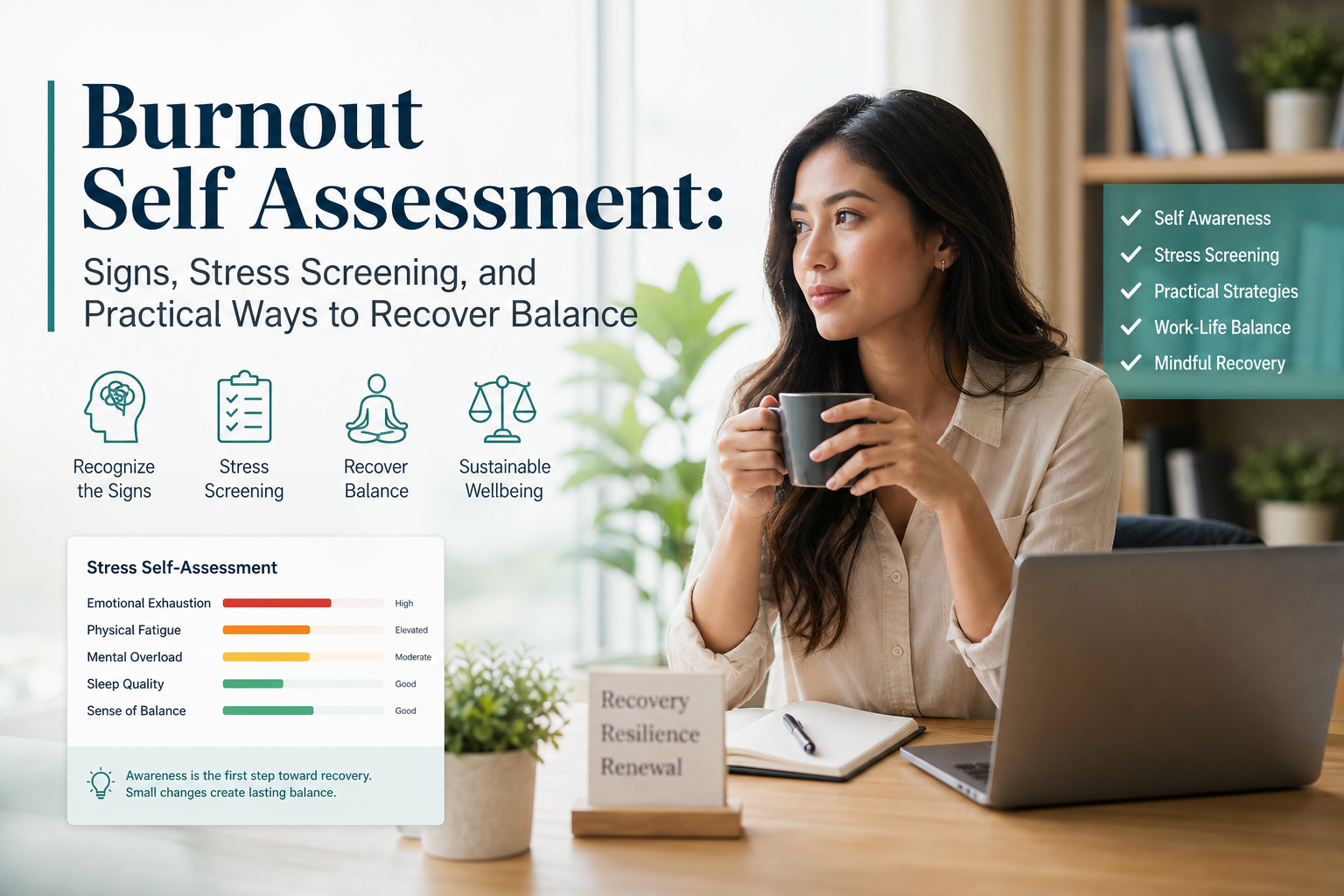
Feeling exhausted, emotionally flat, or constantly overwhelmed can be more than a rough week. A burnout self assessment can help you reflect on your stress patterns, emotional wellbeing, and daily coping capacity before pressure becomes harder to manage. While it cannot diagnose a medical condition, it can offer a useful starting point for stress awareness and healthier decision-making.
If you want a structured way to check your current stress level, an online stress calculator can help you identify how stress may be affecting your mood, energy, sleep, and focus.
What Is a Burnout Self Assessment?
A burnout self assessment is a reflective screening process that helps you recognize signs of ongoing emotional, physical, and mental strain. Burnout is often linked to prolonged stress, especially when demands consistently exceed your ability to recover.
Common areas explored in a stress assessment include:
- Emotional exhaustion and irritability
- Reduced motivation or sense of purpose
- Difficulty concentrating or making decisions
- Sleep disruption and low energy
- Feeling detached, cynical, or overwhelmed
- Reduced performance at work, school, or home
Burnout can affect professionals, students, caregivers, parents, and anyone facing chronic pressure. The goal of self assessment is not to label yourself. It is to notice patterns early and take practical steps toward mental wellness.
Why Stress Awareness Matters
Stress is a normal human response. In short bursts, it can help you focus and respond to challenges. Problems tend to appear when stress becomes persistent, unpredictable, or poorly supported by rest and recovery.
Chronic stress may influence emotional health, relationships, productivity, and lifestyle choices. You might find yourself relying on caffeine, skipping meals, withdrawing from others, or pushing through fatigue because stopping feels impossible.
Stress awareness gives you a clearer picture of what is happening. Instead of assuming you are simply not trying hard enough, you can examine your workload, boundaries, coping strategies, sleep, support system, and resilience habits.
Burnout Self Assessment: Key Signs to Review
Use the following questions as a practical check-in. If several feel familiar, it may be time to reduce pressure, strengthen support, or speak with a qualified professional.
Emotional Signs
- Do you feel emotionally drained most days?
- Are you more impatient, tearful, numb, or easily frustrated?
- Do you feel disconnected from work, relationships, or activities you used to value?
- Do small tasks feel disproportionately difficult?
Cognitive Signs
- Are you struggling to focus or remember details?
- Do you feel mentally foggy or unable to switch off?
- Are you making more mistakes than usual?
- Do you frequently worry about tasks even during rest time?
Physical and Lifestyle Signs
- Has your sleep changed noticeably?
- Do you often feel tired even after resting?
- Are you experiencing more headaches, muscle tension, or digestive discomfort during stressful periods?
- Have your eating, movement, or relaxation habits declined?
These signs do not confirm burnout on their own. They are signals worth listening to. If symptoms are intense, persistent, or affecting your safety or daily functioning, consider reaching out to a mental health professional, physician, or crisis support service in your area.
How Stress Screening Tools Can Help
Structured stress screening tools can make self reflection more objective. One well-known approach is the perceived stress scale, which explores how unpredictable, uncontrollable, and overloaded your life has felt recently. The PSS test is commonly used in research and wellness settings to understand perceived stress rather than diagnose illness.
A PSS-10 online stress screening tool can help you organize your responses and better understand whether your current stress level is mild, moderate, or elevated. This kind of mental health tool is most useful when you treat the results as guidance, not a final answer.
After completing a stress level test, ask yourself:
- What stressors are most consistent in my life?
- Which situations leave me feeling powerless or overloaded?
- What helps me recover, and am I doing enough of it?
- Who can support me practically or emotionally?
Evidence-Based Stress Management Strategies
Burnout recovery is rarely about one big change. It usually comes from consistent adjustments that reduce demands, increase recovery, and improve coping strategies. The following practices are supported by established stress management principles.
1. Protect Recovery Time
Rest is not a reward for finishing everything. It is part of maintaining health and performance. Schedule short recovery breaks during the day, create a realistic shutdown routine after work, and avoid filling every free moment with obligations.
2. Rebuild Healthy Boundaries
Burnout often grows where boundaries are unclear. Consider what you can renegotiate, delegate, delay, or decline. A useful boundary sounds specific: I can review this tomorrow morning or I am unavailable after 7 p.m.
3. Improve Sleep Foundations
Sleep supports emotional regulation, concentration, and resilience. Aim for consistent sleep and wake times when possible. Reduce late-night screen exposure, avoid heavy work discussions before bed, and create a wind-down cue such as reading, stretching, or breathing exercises.
4. Use Calming Techniques for the Nervous System
Simple practices can help reduce acute stress activation. Try slow breathing, progressive muscle relaxation, grounding exercises, or a brief walk outdoors. These tools do not remove the source of stress, but they can help your body shift out of high alert.
5. Strengthen Social Support
Isolation can make stress feel heavier. Talk to someone you trust about what you are experiencing. You do not need to have the perfect explanation. A simple statement such as I have been feeling overwhelmed and could use support can open the door.
6. Review Lifestyle Factors Without Self-Blame
Nutrition, movement, hydration, and alcohol or caffeine use can influence stress tolerance. Choose small, realistic improvements. A ten-minute walk, a balanced breakfast, or drinking more water during the day can support emotional wellbeing without adding pressure.
When to Seek Professional Support
A burnout self assessment is helpful, but it is not a substitute for professional care. Consider speaking with a licensed mental health provider, doctor, counselor, or employee assistance professional if stress is interfering with your work, relationships, sleep, or ability to function.
Seek urgent support if you feel unsafe, have thoughts of self-harm, or feel unable to cope. Professional help can provide assessment, evidence-based treatment options, and a safe plan for recovery.
How Often Should You Take a Stress Test?
Many people benefit from checking in monthly, during high-pressure seasons, or after major life changes. A stress test is especially useful when paired with journaling or habit tracking. Over time, you may notice patterns between workload, sleep, relationships, and emotional health.
The purpose is not to monitor yourself obsessively. It is to build awareness and respond earlier. If your score or self reflection suggests rising stress, choose one or two practical changes rather than trying to overhaul your life overnight.
FAQ
What is the best burnout self assessment?
The best burnout self assessment is one that helps you review emotional exhaustion, workload, recovery, sleep, motivation, and perceived stress. Tools based on structured stress screening, such as the perceived stress scale, can be a helpful starting point.
Can a stress calculator diagnose burnout?
No. A stress calculator or stress assessment can help identify stress patterns, but it cannot provide a medical diagnosis. Use it as an awareness tool and seek professional guidance if symptoms are persistent or severe.
What is the difference between stress and burnout?
Stress often involves feeling pressured or overloaded. Burnout is more commonly associated with prolonged exhaustion, detachment, reduced motivation, and a sense that recovery is not happening despite effort.
How does the PSS-10 online test help?
The PSS-10 online format helps measure perceived stress by asking how uncontrollable, unpredictable, and overwhelming life has felt recently. It can support self reflection and guide healthier coping strategies.
How can I lower my burnout risk?
Protect sleep, set boundaries, take regular breaks, stay connected with supportive people, move your body, and address stressors early. Building resilience comes from consistent recovery habits, not just willpower.
When should I talk to a professional?
Consider professional support if stress affects your sleep, relationships, work, appetite, mood, or daily functioning. Seek immediate help if you feel unsafe or have thoughts of self-harm.
Conclusion
A burnout self assessment is a practical way to pause, notice stress signals, and make informed choices about your mental wellness. By reviewing emotional wellbeing, perceived stress, lifestyle factors, and coping strategies, you can respond to pressure before it becomes more difficult to manage.
For a simple, structured next step, use a free stress level test to better understand your current stress patterns and start building a healthier recovery plan today.
Call to action: Take a few minutes now to assess your stress, reflect honestly on your results, and choose one supportive action you can take in the next 24 hours.