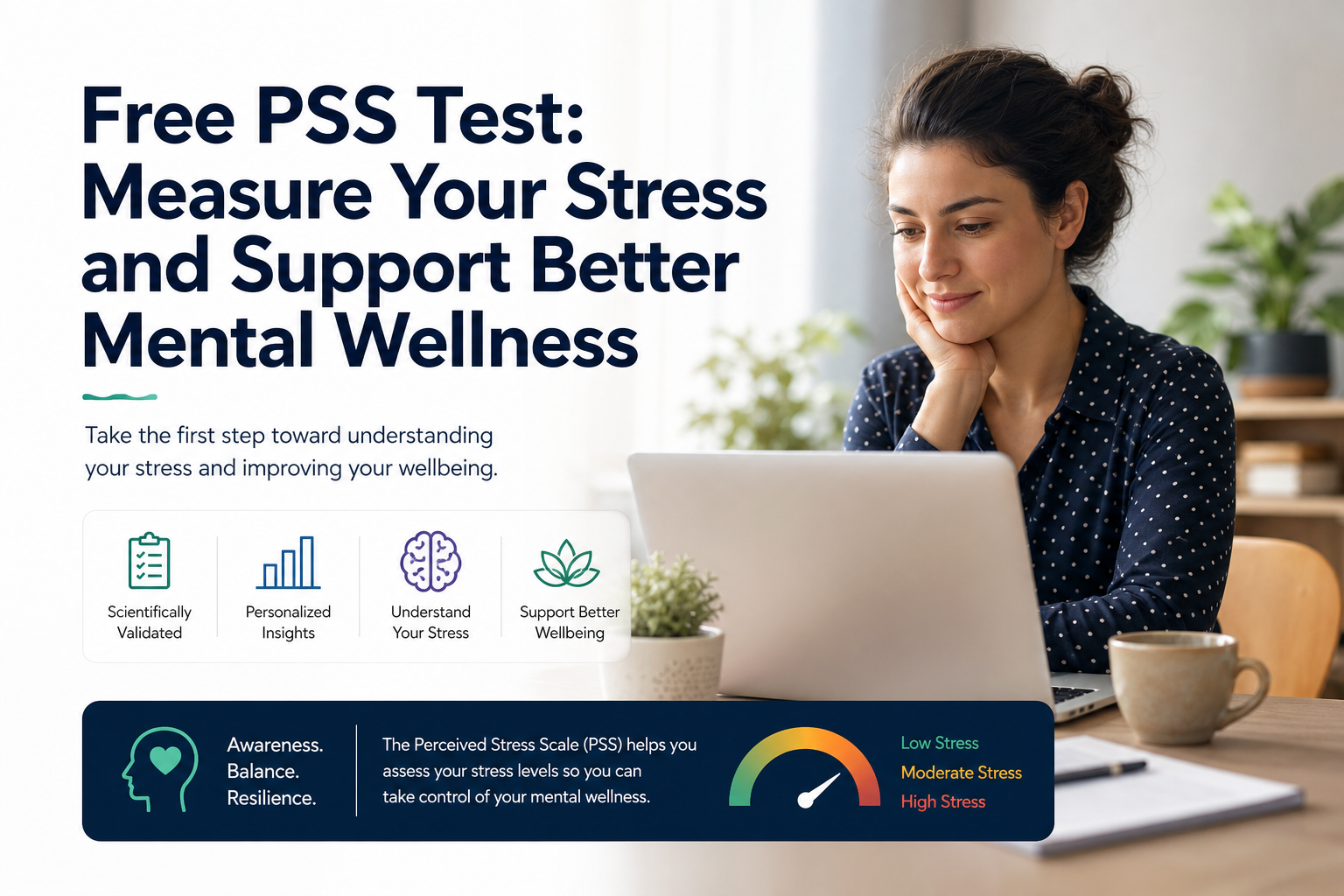
Free PSS Test: Measure Your Stress and Support Better Mental Wellness
Stress can build quietly. A busy schedule, financial pressure, relationship strain, caregiving, poor sleep, or constant uncertainty can all affect how you think, feel, and cope. Taking a free PSS test is a practical first step toward understanding your perceived stress and making informed choices for your emotional wellbeing.
The Perceived Stress Scale, often called the PSS, is one of the most widely used tools for stress awareness. It does not diagnose a mental health condition, but it can help you reflect on how unpredictable, uncontrollable, or overloaded life has felt recently. If you want a simple starting point, an online stress calculator can help you check your current stress level and identify areas that may need attention.
What Is a Free PSS Test?
A free PSS test is a short stress assessment based on the concept of perceived stress. Instead of only asking whether stressful events happened, it asks how you experienced those events. This matters because two people can face similar challenges but respond very differently depending on coping strategies, resilience, support systems, health, and life context.
The most common version is the PSS-10, a 10-question stress screening tool. It asks about feelings and thoughts during the past month, such as whether you felt unable to control important things, confident about handling personal problems, or overwhelmed by difficulties.
A PSS test can be useful for:
- Increasing stress awareness before symptoms become harder to manage
- Tracking changes in perceived stress over time
- Starting conversations about mental wellness with a coach, counselor, or healthcare professional
- Identifying whether lifestyle factors may be affecting emotional health
- Choosing appropriate stress management strategies
Why Perceived Stress Matters
Stress is not only about what happens to you. It is also about how your mind and body interpret pressure. Perceived stress reflects your sense of control, predictability, and ability to cope. When perceived stress stays high for long periods, it may affect sleep quality, concentration, mood, motivation, appetite, and relationships.
Short-term stress can sometimes help you focus and respond to challenges. Chronic stress, however, can drain emotional energy and make everyday tasks feel harder. That is why regular stress screening can be valuable. A stress level test gives you a structured way to pause and notice patterns you might otherwise ignore.
How the Perceived Stress Scale Works
The perceived stress scale usually asks you to rate how often you had certain thoughts or feelings over the last month. Responses may range from never to very often. Some questions focus on distress, while others focus on confidence and coping. The final score gives a general picture of your perceived stress level.
Common PSS Score Ranges
Exact interpretation can vary by version and context, but PSS-10 scores are commonly grouped into general ranges:
- Low perceived stress: You may feel mostly able to manage demands and recover from pressure.
- Moderate perceived stress: You may be coping, but stress is noticeable and may affect mood, sleep, or focus.
- High perceived stress: You may feel frequently overwhelmed, out of control, or emotionally strained.
These ranges are not medical diagnoses. They are indicators for self-reflection and stress awareness. If your score is high or your stress feels unmanageable, consider reaching out to a licensed mental health professional, physician, or trusted support service.
Benefits of Taking a Free PSS Test Online
Using a PSS-10 online tool can make stress assessment more accessible. You can complete it privately, quickly, and without needing special equipment. For many people, seeing a score helps turn vague feelings into something easier to understand and act on.
A Perceived Stress Scale assessment can support mental wellness by helping you recognize whether stress is temporary, increasing, or becoming a persistent concern. It may also encourage healthier habits before stress affects your daily functioning more seriously.
It Encourages Early Awareness
Many people wait until burnout, panic, exhaustion, or conflict appears before addressing stress. A free stress level test can help you check in earlier. Awareness gives you more options.
It Helps You Track Progress
If you are practicing relaxation techniques, improving sleep, exercising, setting boundaries, or attending therapy, repeating a stress assessment every few weeks can help you notice trends. The goal is not to chase a perfect score, but to understand what supports your wellbeing.
It Supports Better Conversations
A PSS test result can help you describe your experience more clearly. Instead of saying, I am stressed, you can discuss what feels uncontrollable, what situations trigger tension, and which coping strategies are helping.
Evidence-Based Stress Management Strategies
After taking a free PSS test, the next step is to respond with practical actions. Stress management works best when it includes both immediate calming tools and long-term lifestyle support.
1. Use Breathing to Calm the Stress Response
Slow breathing can help regulate the nervous system. Try inhaling for four counts, exhaling for six counts, and repeating for three to five minutes. Longer exhales can signal safety to the body and reduce physical tension.
2. Improve Sleep Consistency
Sleep and stress are closely connected. Aim for a consistent wake time, reduce late caffeine, keep screens away near bedtime when possible, and create a wind-down routine. Even small improvements in sleep can support resilience.
3. Move Your Body Regularly
Physical activity can reduce stress hormones and improve mood. You do not need intense workouts to benefit. Walking, stretching, cycling, yoga, dancing, or strength training can all support emotional wellbeing.
4. Identify Controllable and Uncontrollable Stressors
Write down your current stressors and separate them into two categories: things you can influence and things you cannot fully control. This simple exercise can reduce mental clutter and help you focus energy where it matters.
5. Strengthen Social Support
Supportive relationships are a protective factor for mental health. Talk with someone you trust, join a community group, or schedule regular check-ins with family or friends. Connection can reduce the feeling of carrying stress alone.
6. Practice Cognitive Reframing
Cognitive reframing means noticing unhelpful thought patterns and considering more balanced alternatives. For example, instead of I cannot handle anything, you might try This is difficult, but I can take one step at a time.
7. Set Realistic Boundaries
High perceived stress often grows when demands exceed available energy. Boundaries may include saying no, limiting after-hours work, scheduling recovery time, or clarifying expectations with others.
When to Seek Professional Support
A stress test is a mental health tool for awareness, not a substitute for professional care. Consider speaking with a qualified professional if stress is interfering with work, school, relationships, sleep, appetite, or daily responsibilities. You should also seek help promptly if you feel hopeless, unsafe, or unable to cope.
Professional support may include counseling, cognitive behavioral therapy, medical evaluation, stress management coaching, or other evidence-informed approaches. Getting help is not a sign of weakness. It is a proactive step toward emotional health.
How Often Should You Take a Free PSS Test?
For general self-awareness, taking a free PSS test once a month can be reasonable because the questions often refer to the past month. You might also retake it during major life transitions, after starting new coping strategies, or when you notice changes in mood, sleep, or energy.
Avoid taking it repeatedly in the same day to reassure yourself. Stress scores are most useful when they reflect real-life patterns over time, not moment-to-moment anxiety.
FAQ About the Free PSS Test
What does PSS stand for?
PSS stands for Perceived Stress Scale. It is a research-based questionnaire designed to measure how stressful and uncontrollable life has felt recently.
Is a free PSS test the same as a diagnosis?
No. A free PSS test is a stress screening and self-reflection tool. It does not diagnose anxiety, depression, burnout, or any medical condition.
How long does a PSS-10 online test take?
Most PSS-10 online assessments take only a few minutes. You answer 10 questions based on your thoughts and feelings during the past month.
What is a good PSS score?
Lower scores generally suggest lower perceived stress, while higher scores suggest greater stress. The most important insight is whether your score matches how you feel and whether it changes over time.
Can I use a stress calculator for mental wellness tracking?
Yes. A stress calculator can help you track perceived stress as part of a broader mental wellness routine that includes sleep, movement, social support, and healthy coping strategies.
What should I do if my stress level test result is high?
Start with small, practical steps such as breathing exercises, better sleep routines, and support from trusted people. If stress feels overwhelming or persistent, consult a qualified professional.
Conclusion: Use a Free PSS Test as a Starting Point for Better Stress Awareness
A free PSS test can help you understand how stress is affecting your daily life, emotional wellbeing, and sense of control. While it is not a diagnosis, it offers a valuable snapshot of perceived stress and can guide healthier decisions.
Stress awareness is most powerful when paired with action. Use your results to build coping strategies, protect recovery time, improve lifestyle habits, and seek support when needed. If you are ready to check in with yourself, take a free stress level test and use the results as a practical step toward better mental wellness.
Call to action: Take a few minutes today to assess your stress, reflect on your current coping habits, and choose one evidence-based strategy you can practice this week.