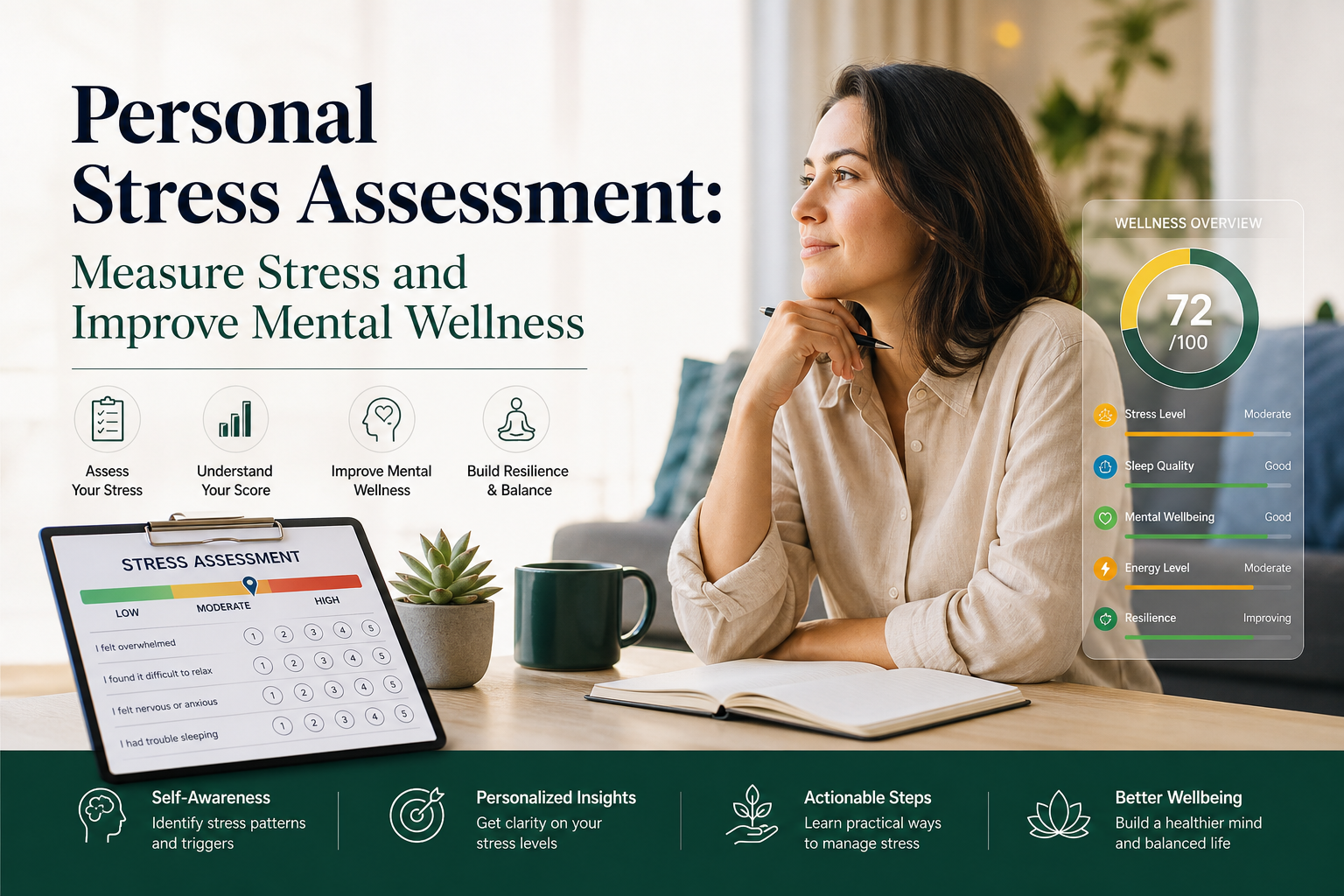
Stress is not always obvious while you are living through it. It can show up as poor sleep, irritability, low motivation, headaches, racing thoughts, or the feeling that ordinary responsibilities have become harder to manage. A personal stress assessment helps you pause, reflect, and understand how much pressure you may be carrying before it affects your emotional wellbeing, relationships, or daily performance.
Using a structured personal stress assessment can be a practical first step toward stress awareness. It does not diagnose a medical condition, but it can help you identify patterns, recognize risk factors, and choose healthier coping strategies based on your current stress level.
What Is a Personal Stress Assessment?
A personal stress assessment is a self-reflection tool designed to measure how stressed you feel and how stress is affecting your life. It often asks about your thoughts, emotions, behaviors, sleep, energy, and ability to cope with daily demands.
Many stress screening tools are inspired by established concepts such as perceived stress, which focuses on how unpredictable, uncontrollable, or overloaded your life feels. This matters because two people can experience the same situation differently. Your perception, support system, resilience, and coping skills all influence how stress affects you.
Common areas a stress assessment may explore
- How often you feel overwhelmed or unable to cope
- Changes in sleep, appetite, focus, or mood
- Physical tension, fatigue, or restlessness
- Work, family, financial, or relationship pressure
- Your confidence in managing challenges
- Use of healthy or unhealthy coping strategies
Why Stress Awareness Matters
Stress is a normal human response, but chronic stress can gradually reduce mental wellness and emotional health. When stress stays high for too long, it may affect decision-making, patience, immune function, sleep quality, and motivation. Becoming aware of stress early gives you more options.
Stress awareness is not about labeling yourself as weak or unable to cope. It is about noticing signals from your mind and body. When you understand your stress level, you can make informed choices, adjust lifestyle factors, and seek support when needed.
Signs your stress level may be increasing
- You feel tense or on edge most days
- You struggle to relax even during downtime
- Your sleep is shorter, lighter, or less refreshing
- You feel emotionally reactive or easily frustrated
- You avoid responsibilities because they feel too heavy
- You rely more on caffeine, alcohol, scrolling, or overeating to cope
How a Stress Calculator Can Support Mental Wellness
A stress calculator or stress level test gives you a structured way to check in with yourself. Instead of guessing whether you are under too much pressure, you answer targeted questions that help organize your experience.
For example, a PSS-10 online stress screening may be useful if you want a quick snapshot of perceived stress. The PSS test, also known as the Perceived Stress Scale, is widely recognized in stress research because it measures how people appraise the demands in their lives. While an online tool should not replace a professional evaluation, it can encourage meaningful self-awareness.
A mental health tool like this can help you:
- Track stress changes over time
- Identify when you may need more rest or support
- Start a conversation with a counselor, coach, or healthcare provider
- Understand whether your current coping strategies are helping
- Build a more intentional stress management plan
Personal Stress Assessment and the Perceived Stress Scale
The perceived stress scale is based on the idea that stress depends not only on what happens to you, but also on how manageable life feels. This makes it especially relevant for personal reflection. If you often feel that things are outside your control, your perceived stress may be high even if others do not see your situation as extreme.
A PSS-10 online assessment typically asks about the past month. Questions focus on feeling nervous, confident, in control, overloaded, or able to handle irritations. The goal is not to judge you. The goal is to help you better understand your current mental load.
What your results can and cannot tell you
A stress assessment can suggest whether your stress appears low, moderate, or high. It can guide self-care and help you decide whether to make changes. However, it cannot diagnose anxiety, depression, burnout, trauma, or any medical condition. If your stress feels severe, persistent, or unsafe, professional support is important.
Evidence-Based Stress Management Strategies
Once you understand your stress level, the next step is action. Effective stress management usually combines practical problem-solving, emotional regulation, physical care, and social support. Small changes repeated consistently often work better than dramatic changes that are hard to maintain.
1. Use breathing to calm your nervous system
Slow breathing can reduce physical arousal and help your body shift away from fight-or-flight mode. Try inhaling for four counts, exhaling for six counts, and repeating for three to five minutes. Longer exhales can be especially calming.
2. Improve sleep routines
Sleep and stress influence each other. Set a consistent wake time, reduce screen exposure before bed, and create a short wind-down routine. If worries appear at night, keep a notebook nearby and write them down for tomorrow.
3. Move your body regularly
Exercise helps release tension, supports mood, and improves resilience. You do not need an intense workout. A 10-minute walk, stretching, cycling, dancing, or gentle yoga can help reduce stress hormones and improve emotional wellbeing.
4. Strengthen coping strategies
Healthy coping strategies include planning, asking for help, setting boundaries, journaling, mindfulness, and breaking tasks into smaller steps. Less helpful strategies, such as avoidance or numbing, may bring temporary relief but can increase stress later.
5. Build resilience through connection
Supportive relationships buffer stress. Talk with someone you trust, join a community group, or consider working with a mental health professional. Resilience is not about handling everything alone. It is the ability to recover, adapt, and access support.
6. Reduce controllable stressors
Some stressors cannot be removed, but many can be managed. Review your commitments, digital habits, work boundaries, and financial routines. Ask: What can I simplify? What can I delay? What can I delegate? What needs a clearer boundary?
When to Seek Professional Support
A personal stress assessment is useful for awareness, but support from a qualified professional may be necessary if stress is interfering with daily life. Consider reaching out to a healthcare provider, therapist, counselor, or crisis service if you experience ongoing panic, hopelessness, persistent sleep problems, substance misuse, or thoughts of self-harm.
Professional support can help you understand underlying causes, learn personalized coping tools, and address related mental health concerns. Seeking help is a proactive step, not a failure.
How Often Should You Take a Stress Assessment?
For general mental wellness, many people benefit from taking a stress test once a month or during major life transitions. You may also use a stress screening tool when you notice changes in mood, sleep, workload, relationships, or health habits.
Tracking results over time can reveal patterns. For example, you may discover that stress rises during busy work seasons, after poor sleep, or when personal boundaries become unclear. This information can help you plan ahead and protect your emotional health.
FAQ: Personal Stress Assessment
What is the purpose of a personal stress assessment?
Its purpose is to help you understand your current stress level, recognize patterns, and choose practical stress management strategies. It supports awareness but does not provide a medical diagnosis.
Is an online stress calculator accurate?
An online stress calculator can be useful for self-reflection, especially when based on recognized concepts like perceived stress. However, results should be viewed as guidance, not a clinical evaluation.
What is the PSS test?
The PSS test refers to the Perceived Stress Scale, a well-known stress assessment method that explores how unpredictable, uncontrollable, and overwhelming life has felt recently.
How is a stress level test different from a mental health diagnosis?
A stress level test screens for stress patterns and perceived pressure. A diagnosis requires a qualified professional who considers symptoms, history, functioning, and clinical criteria.
Can stress assessment improve emotional wellbeing?
Yes, it can support emotional wellbeing by increasing self-awareness and encouraging healthier coping strategies. The benefit comes from using the results to make meaningful changes.
When should I get help for stress?
Seek professional support if stress feels unmanageable, lasts for weeks, affects work or relationships, disrupts sleep, or leads to harmful coping behaviors or thoughts of self-harm.
Conclusion: Make Stress Awareness a Healthy Habit
A personal stress assessment is a simple but powerful way to understand your mental load, improve stress awareness, and take better care of your emotional wellbeing. By combining regular self-check-ins with evidence-based stress management, you can build resilience and respond to pressure more intentionally.
If you are ready to understand your current stress level, use this mental wellness assessment today and turn your results into a practical plan for better balance, healthier coping, and long-term mental wellness.