PSS Score Calculator: Measure Perceived Stress and Improve Mental Wellness
Stress is not always easy to recognize while you are in the middle of it. You may feel tired, irritable, distracted, overwhelmed, or emotionally drained without realizing how much pressure has built up. A PSS score calculator can help you pause, reflect, and better understand your perceived stress level using a structured, research-informed approach.
The Perceived Stress Scale, often called the PSS, is one of the most widely used tools for stress assessment. It does not diagnose a mental health condition, but it can offer meaningful insight into how unpredictable, uncontrollable, or overloaded life has felt recently. That awareness is often the first step toward healthier coping strategies, improved emotional wellbeing, and better mental wellness.
What Is a PSS Score Calculator?
A PSS score calculator is an online stress calculator that helps estimate your perceived stress score based on your answers to standard questions from the perceived stress scale. The most common version is the PSS-10, which includes 10 questions about your thoughts and feelings over the past month.
Unlike a casual stress quiz, the PSS test focuses on how you experience and respond to daily demands. It asks about feelings of control, confidence, nervousness, irritation, and overload. These areas are closely tied to emotional health, resilience, and your ability to manage pressure.
A PSS-10 online tool can be useful if you want to:
- Understand your current stress level more clearly
- Track changes in perceived stress over time
- Reflect on lifestyle factors that may affect wellbeing
- Start a conversation with a counselor, coach, or healthcare professional
- Build a more intentional stress management plan
Why Perceived Stress Matters
Stress is not only about what happens to you. It is also about how manageable those experiences feel. Two people may face similar workloads, family responsibilities, or financial pressures, yet their stress responses can differ significantly.
Perceived stress refers to your personal sense of whether life feels unpredictable, uncontrollable, or overwhelming. This matters because long-term high perceived stress may affect sleep, concentration, mood, motivation, relationships, and physical habits such as eating or exercise.
A stress screening tool can help you identify patterns before they become harder to manage. While it should not replace professional evaluation, it can support self-awareness and encourage timely action.
How the Perceived Stress Scale Works
The perceived stress scale asks you to rate how often certain feelings or experiences occurred during the last month. Responses usually range from never to very often. Some questions are scored in reverse because they measure positive coping, such as feeling confident about handling personal problems.
Common Areas Measured by the PSS Test
The PSS test explores several important aspects of mental and emotional functioning, including:
- Feeling unable to control important things in life
- Feeling nervous, stressed, or under pressure
- Feeling confident about handling problems
- Feeling that difficulties are piling up
- Feeling angered by things outside your control
- Feeling able to cope with daily responsibilities
These questions create a broader picture of stress perception rather than focusing on one isolated event.
What Your Score Can Tell You
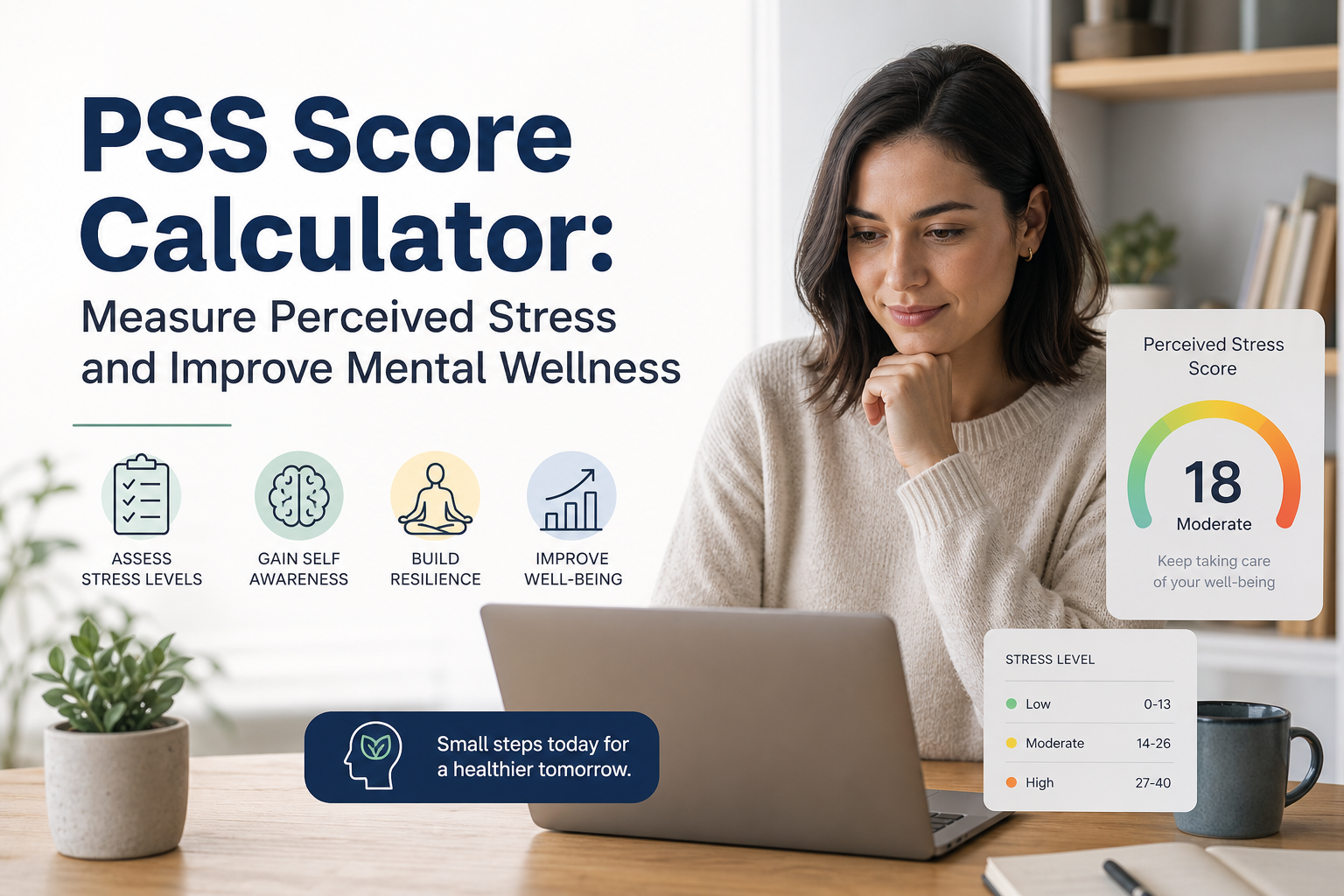
Your PSS score can generally indicate whether your perceived stress is low, moderate, or high. A lower score often suggests that you feel more in control and better able to cope. A higher score may suggest that life currently feels more demanding, unpredictable, or emotionally taxing.
It is important to interpret your result with context. A high score does not mean something is wrong with you. It may simply reflect a difficult season, limited support, poor sleep, major life changes, workplace pressure, caregiving responsibilities, or other stressors.
Using a PSS Score Calculator for Stress Awareness
One of the biggest benefits of a PSS score calculator is that it turns vague feelings into a clearer stress assessment. Instead of saying, I feel stressed all the time, you can identify whether your current stress level is mild, moderate, or elevated and begin asking what may be contributing to it.
A reliable Perceived Stress Scale assessment can be especially helpful when used as a reflection tool. You might take it once, note your score, then repeat it after several weeks of sleep improvements, exercise, counseling, mindfulness, or changes to your workload.
Tracking your score can help you notice whether your coping strategies are working. It can also make it easier to discuss stress with a professional because you have a structured result to reference.
Evidence-Based Ways to Manage Stress
Stress management works best when it is practical, realistic, and consistent. You do not need to transform your entire life overnight. Small, repeatable habits can strengthen resilience and support emotional wellbeing over time.
1. Improve Sleep Foundations
Sleep and stress influence each other. When sleep is poor, daily challenges often feel more intense. Try setting a consistent bedtime, reducing late-night screen exposure, limiting caffeine later in the day, and creating a wind-down routine that signals safety and rest.
2. Use Breathing and Grounding Techniques
Slow breathing can help calm the body’s stress response. A simple approach is to inhale for four counts, exhale for six counts, and repeat for several minutes. Grounding techniques, such as noticing five things you can see or four things you can feel, can also help when your mind is racing.
3. Move Your Body Regularly
Physical activity supports mental wellness by reducing tension, improving mood, and increasing energy. Walking, stretching, cycling, dancing, yoga, or strength training can all be helpful. The best exercise is the one you can repeat consistently.
4. Strengthen Social Support
Stress often feels heavier when carried alone. Talking with a trusted friend, family member, peer group, therapist, or support community can reduce emotional isolation. Social connection is a key protective factor for resilience.
5. Reframe Unhelpful Thoughts
Stress can narrow your thinking and make problems feel permanent or impossible. Cognitive reframing involves asking questions such as: What is within my control? What is the next small step? Is there another way to view this situation? This does not dismiss hardship, but it can restore a sense of agency.
6. Reduce Avoidable Stressors
Some stressors cannot be removed, but others can be adjusted. Consider whether you can set clearer boundaries, delegate tasks, organize finances, reduce digital overload, or simplify commitments. Even small changes can lower your daily stress load.
When to Seek Professional Support
A stress level test can provide insight, but it is not a medical diagnosis. If stress is interfering with sleep, work, relationships, appetite, motivation, or daily functioning, consider speaking with a licensed mental health professional or healthcare provider.
You should seek urgent support if you feel unsafe, are thinking about harming yourself, or feel unable to cope. In those situations, contact local emergency services, a crisis hotline, or a trusted person immediately.
Professional support can help you understand underlying causes, learn coping strategies, and create a plan that fits your life. Asking for help is a sign of self-awareness, not weakness.
How Often Should You Take a Stress Assessment?
For general self-awareness, many people find it helpful to complete a stress assessment once a month or during major life transitions. If you are actively working on stress management, you might use a PSS-10 online tool every few weeks to monitor patterns.
Avoid checking too often if it makes you more anxious. The goal is not to obsess over a number. The goal is to use your score as one piece of information that supports healthier choices.
FAQ About the PSS Score Calculator
What is a PSS score calculator?
A PSS score calculator is a mental health tool that estimates your perceived stress score based on responses to the Perceived Stress Scale, commonly the PSS-10.
Is the PSS test a diagnosis?
No. The PSS test is a stress screening and self-reflection tool. It can show perceived stress levels, but it does not diagnose anxiety, depression, or any medical condition.
What is a good PSS score?
Lower scores generally suggest lower perceived stress, while higher scores suggest greater perceived stress. Your score should be interpreted in context, including current life events and support systems.
Can I take the PSS-10 online?
Yes. A PSS-10 online stress calculator can make it easier to complete the questions, calculate your score, and reflect on your stress level quickly.
How accurate is a stress calculator?
A stress calculator can be useful for awareness and tracking trends, but accuracy depends on honest answers and proper interpretation. It should be used as a guide, not a final judgment.
What should I do if my stress score is high?
Start with practical coping strategies such as sleep improvement, movement, breathing exercises, social support, and boundary setting. If stress feels unmanageable, seek professional support.
Conclusion: Use Your PSS Score as a Starting Point
A PSS score calculator can help you understand how stressed you feel, what may be affecting your emotional health, and where to begin making changes. Your score is not a label. It is a snapshot of your perceived stress and an invitation to care for your mental wellness more intentionally.
If you are ready to better understand your stress level, use the free stress level test and take a few minutes to reflect on your results. Small steps, repeated consistently, can build resilience and help you feel more grounded in daily life.
Call to action: Take your PSS score today, review your stress patterns, and choose one evidence-based coping strategy to practice this week.