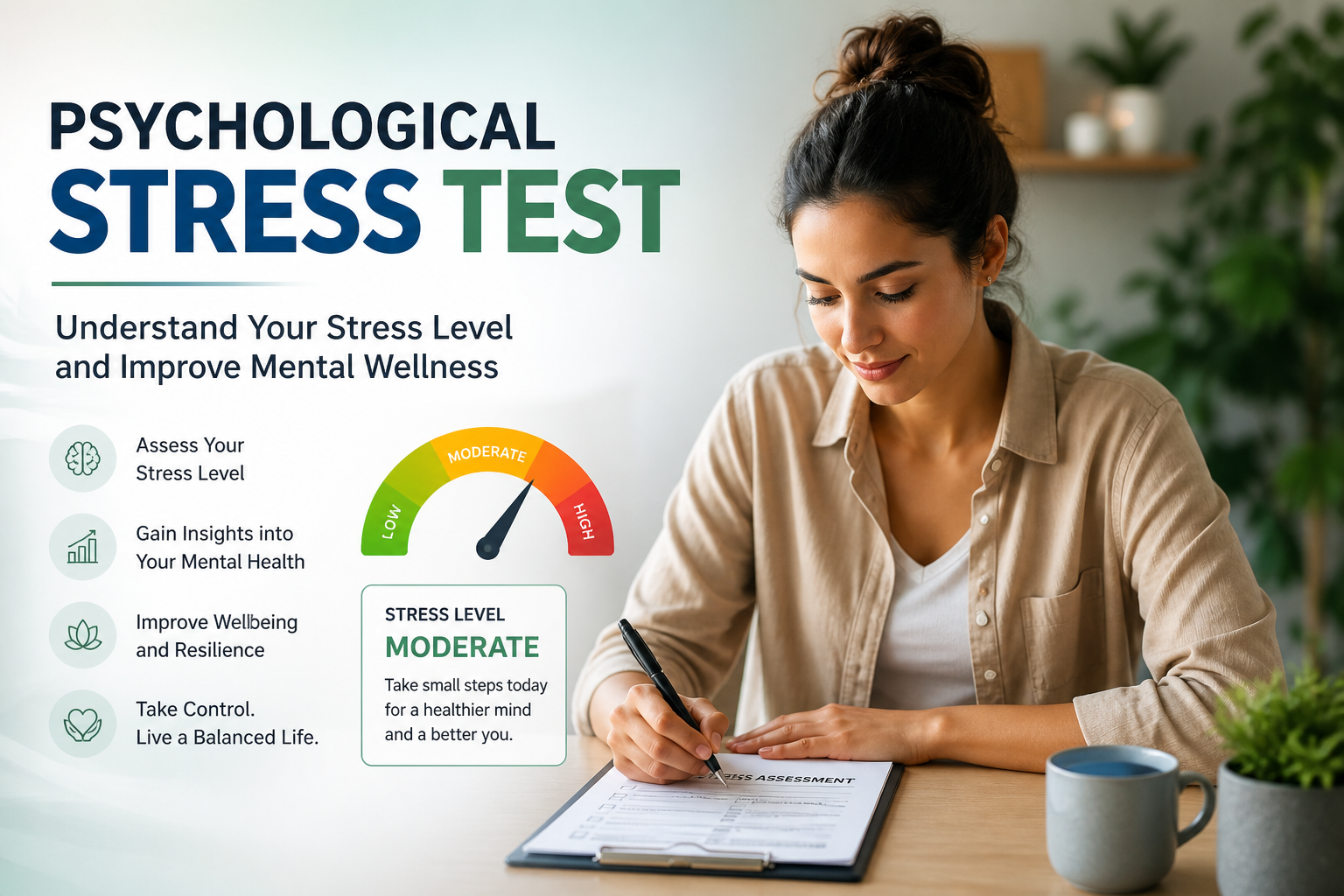
Psychological Stress Test: Understand Your Stress Level and Improve Mental Wellness
Stress is a normal part of life, but when pressure becomes constant, it can affect your sleep, focus, mood, relationships, and overall emotional health. A psychological stress test can help you pause, reflect, and better understand how stress is showing up in your daily life.
While no online tool can diagnose a mental health condition, a structured free psychological stress assessment can give you useful insight into your perceived stress, coping patterns, and areas where you may need more support.
This guide explains how stress testing works, what a stress level test can reveal, and how evidence-based stress management strategies can support better mental wellness.
What Is a Psychological Stress Test?
A psychological stress test is a self-assessment designed to measure how overwhelmed, tense, or emotionally burdened you feel. Unlike a medical test that measures blood pressure or cortisol, this type of stress assessment focuses on your thoughts, feelings, behaviors, and perception of control.
Many tools are based on established concepts such as perceived stress, which refers to how unpredictable, uncontrollable, or overloaded life feels. Two people can face the same challenge but experience very different stress levels depending on their coping strategies, support system, health, and resilience.
A stress test may ask about:
- How often you feel unable to manage responsibilities
- Whether you feel nervous, irritated, or emotionally drained
- How well you recover after stressful events
- Changes in sleep, concentration, or motivation
- Your ability to cope with unexpected problems
Why Stress Awareness Matters
Stress awareness is the first step toward healthier self-regulation. Many people normalize chronic stress until it begins to affect their work performance, relationships, immune health, or emotional wellbeing.
Regular stress screening can help you notice patterns earlier. For example, you may discover that your stress rises during financial pressure, caregiving responsibilities, workplace deadlines, exams, or lack of sleep. Once you understand your triggers, you can choose more effective coping strategies instead of reacting automatically.
Stress awareness also reduces self-blame. Feeling overwhelmed does not mean you are weak. It may mean your current demands are exceeding your available resources. A mental health tool can help you identify that imbalance and take practical steps to restore it.
How the Perceived Stress Scale and PSS Test Work
One of the best-known approaches to stress assessment is the Perceived Stress Scale, often referred to as the PSS test. The PSS is widely used in research and wellness settings to evaluate how stressful a person perceives their life to be over a recent period.
The common PSS-10 format includes 10 questions that explore feelings of control, confidence, overload, and emotional pressure. A PSS-10 online stress screening tool can make this process easier by calculating a score and helping you interpret your stress range.
Typical stress categories may include low, moderate, or high perceived stress. These categories are not a diagnosis. Instead, they are a snapshot of your current stress experience and a starting point for reflection.
What a Stress Calculator Can Tell You
A stress calculator or stress level test may help you understand:
- Your current perceived stress level
- Whether stress has become persistent or intense
- How much control you feel over daily challenges
- Whether your coping strategies are supporting or draining you
- When it may be time to seek extra support
The value of a stress screening is not only the score. The real benefit comes from using the results to make better decisions about rest, boundaries, lifestyle habits, and emotional health.
Common Signs You May Be Under Too Much Stress
Stress affects the mind and body. Some symptoms are obvious, while others appear gradually. Pay attention if you notice several of these signs occurring often:
Emotional Signs
- Feeling anxious, tense, angry, or easily irritated
- Loss of enjoyment or emotional numbness
- Feeling overwhelmed by ordinary tasks
- Low patience or frequent mood changes
Cognitive Signs
- Racing thoughts or constant worry
- Difficulty concentrating
- Forgetfulness or indecision
- Feeling mentally exhausted
Physical and Behavioral Signs
- Headaches, muscle tension, or stomach discomfort
- Changes in sleep or appetite
- Procrastination or withdrawal from others
- Increased use of alcohol, caffeine, or unhealthy coping habits
If stress symptoms feel intense, long-lasting, or interfere with daily life, consider speaking with a licensed mental health professional or healthcare provider.
Evidence-Based Stress Management Strategies
Stress management works best when it combines self-awareness with consistent habits. The following strategies are supported by psychological and behavioral health research and can be adapted to your lifestyle.
1. Practice Controlled Breathing
Slow breathing helps calm the body’s stress response. Try inhaling for four seconds, exhaling for six seconds, and repeating for three to five minutes. This simple technique can reduce tension and support emotional regulation.
2. Reframe Stressful Thoughts
Stress often increases when thoughts become catastrophic or overly self-critical. Cognitive reframing means asking, “Is there another way to view this?” or “What is one realistic next step?” This can reduce mental overload and improve problem-solving.
3. Strengthen Daily Recovery Habits
Resilience is not built only during major challenges. It grows through daily recovery. Prioritize sleep, regular meals, hydration, movement, sunlight, and short breaks. These lifestyle factors influence mood, energy, and coping capacity.
4. Set Healthier Boundaries
Chronic stress often comes from saying yes too often. Boundaries may include limiting work after hours, reducing unnecessary commitments, or communicating needs clearly. Protecting your time is part of protecting your mental wellness.
5. Use Social Support
Talking with a trusted friend, family member, mentor, or counselor can reduce emotional pressure. Supportive connection helps the brain process stress and reminds you that you do not have to manage everything alone.
6. Track Stress Patterns
Use a journal or stress calculator regularly to notice changes over time. Track sleep, mood, workload, exercise, and major stressors. Patterns can reveal which habits improve emotional wellbeing and which situations need adjustment.
When Should You Take a Stress Level Test?
You do not need to wait until stress feels unmanageable. A stress level test can be useful during major life transitions, after a demanding work period, during exams, while caregiving, or whenever you feel emotionally stretched.
Consider taking a psychological stress test if you:
- Feel overwhelmed more days than not
- Have trouble relaxing even when tasks are finished
- Notice sleep, appetite, or mood changes
- Feel less patient, focused, or motivated
- Want a simple mental wellness check-in
For best results, answer honestly based on how you have felt recently. The goal is not to get a perfect score. The goal is to understand your current mental load and choose healthier next steps.
FAQ: Psychological Stress Test
Is a psychological stress test accurate?
A psychological stress test can provide a helpful estimate of perceived stress, especially when based on structured tools like the perceived stress scale. However, it is not a medical diagnosis and should be used as a self-awareness tool.
What is the difference between a stress test and a PSS test?
A general stress test may use different questions to assess stress symptoms. A PSS test specifically measures perceived stress, including how unpredictable, uncontrollable, or overwhelming life feels.
Can I take a PSS-10 online?
Yes, a PSS-10 online assessment can help you calculate your perceived stress score quickly. It is useful for personal reflection, wellness tracking, and identifying when stress management may be needed.
How often should I take a stress assessment?
Many people benefit from taking a stress assessment monthly or during stressful periods. Regular check-ins can help you track patterns and respond before stress becomes chronic.
What should I do if my stress score is high?
A high score may be a sign to reduce demands, improve recovery habits, use coping strategies, and seek support. If stress is severe or affecting daily functioning, contact a qualified mental health professional.
Can stress affect physical health?
Yes. Ongoing stress can influence sleep, digestion, muscle tension, energy, and immune function. Managing stress supports both emotional health and overall wellbeing.
Conclusion: Use a Psychological Stress Test as a Mental Wellness Check-In
A psychological stress test is a practical way to understand your current stress level, improve self-awareness, and take action before pressure becomes overwhelming. By combining stress screening with healthy coping strategies, better boundaries, and supportive lifestyle habits, you can strengthen resilience and protect your emotional wellbeing.
Remember, an online stress test is not a substitute for professional care. If your stress feels unmanageable, persistent, or connected to anxiety, depression, trauma, or burnout, reach out to a licensed professional for personalized support.
Ready to check in with yourself? Use the online stress calculator to assess your perceived stress, understand your results, and take the first step toward better mental wellness today.