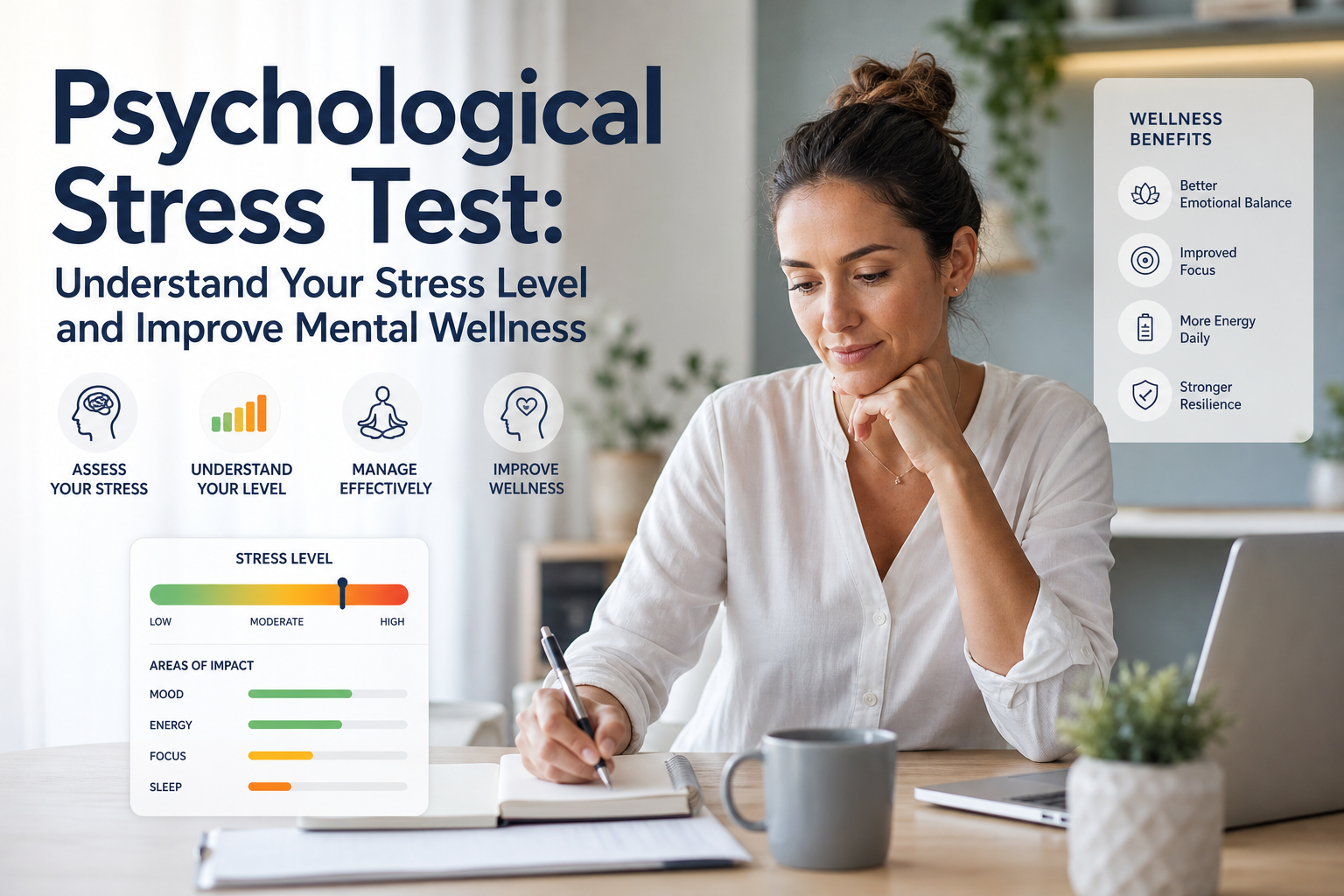
Psychological Stress Test: Understand Your Stress Level and Improve Mental Wellness
Stress is part of life, but chronic or unmanaged stress can affect your sleep, concentration, relationships, productivity, and emotional wellbeing. A psychological stress test can help you pause, reflect, and better understand how stress is showing up in your daily routine.
While no online tool can diagnose a mental health condition, a structured stress assessment can provide useful insight into your perceived stress, coping capacity, and current mental wellness. It can also help you decide whether lifestyle changes, support, or professional guidance may be helpful.
What Is a Psychological Stress Test?
A psychological stress test is a questionnaire or screening tool designed to measure how stressed you feel and how well you believe you are coping. It usually asks about thoughts, emotions, physical tension, sleep, workload, control, and daily pressure.
Many stress screening tools are based on the concept of perceived stress. This means they focus not only on what is happening in your life, but also on how overwhelming, unpredictable, or uncontrollable those situations feel to you.
Common Signs a Stress Test May Help
You may benefit from taking a stress level test if you notice:
- Frequent irritability, worry, or emotional exhaustion
- Difficulty sleeping or waking up tired
- Headaches, muscle tension, or digestive discomfort
- Feeling overwhelmed by normal responsibilities
- Trouble focusing or making decisions
- Withdrawing from friends, family, or activities
- Using food, alcohol, scrolling, or avoidance to cope
These signs do not automatically mean something is seriously wrong, but they are worth paying attention to. Stress awareness is often the first step toward healthier coping strategies.
How a Psychological Stress Test Supports Stress Awareness
Stress can build gradually. Many people adapt to pressure so well that they do not realize how strained they are until symptoms interfere with daily life. A psychological stress test gives structure to self-reflection.
Instead of simply asking, Am I stressed?, a good stress test encourages you to consider patterns such as:
- How often you feel unable to control important things
- How frequently life feels unpredictable
- Whether you feel confident handling personal problems
- How often stress affects your mood, energy, or behavior
- Whether you feel emotionally balanced or constantly reactive
This kind of stress assessment can help you identify whether your stress is occasional, moderate, or potentially high enough to require more intentional support.
Understanding the Perceived Stress Scale and PSS Test
One of the most widely recognized approaches to measuring stress is the Perceived Stress Scale, often referred to as the PSS test. The popular PSS-10 version includes 10 questions that explore how unpredictable, uncontrollable, and overloaded life has felt recently.
A PSS-10 online screening can be useful because it focuses on your subjective experience. Two people may face similar life events but experience very different stress levels depending on support, coping skills, health, workload, and resilience.
What a PSS-10 Score Can and Cannot Tell You
A PSS test can help you understand your perceived stress level, but it should not be treated as a diagnosis. It cannot confirm anxiety, depression, burnout, or any medical condition. Instead, it acts as a mental health tool for reflection and early awareness.
If your results suggest high stress, consider it a signal to review your habits, support system, and current demands. If stress feels unmanageable, persistent, or connected to thoughts of self-harm, seek support from a licensed mental health professional, physician, or crisis service immediately.
Benefits of Taking an Online Stress Calculator
An online stress calculator can make stress screening more accessible. It gives you a private, quick, and structured way to check in with yourself before stress becomes harder to manage.
Using a free stress level test can help you:
- Recognize stress patterns early
- Track changes over time
- Start conversations with a counselor, coach, or healthcare provider
- Choose more appropriate coping strategies
- Understand how lifestyle factors affect mental wellness
- Build emotional self-awareness without judgment
For best results, answer honestly based on how you have felt recently, not how you think you should feel. Stress assessment is most useful when it reflects your real experience.
Evidence-Based Stress Management Strategies
After taking a psychological stress test, the next step is action. Your score is only useful if it helps you make informed changes. Evidence-based stress management focuses on reducing unnecessary pressure, improving coping skills, and strengthening resilience.
1. Regulate Your Body First
Stress is not only mental. It affects the nervous system, muscles, heart rate, breathing, and hormones. Simple body-based techniques can help reduce immediate tension.
- Practice slow breathing, such as inhaling for four counts and exhaling for six
- Take a 10-minute walk to discharge physical tension
- Stretch your shoulders, neck, jaw, and back
- Limit excessive caffeine if it worsens anxiety or restlessness
- Prioritize regular meals and hydration
2. Improve Sleep Consistency
Sleep and stress influence each other. Poor sleep can make stress feel more intense, while high stress can make sleep harder. Aim for a consistent wake time, reduce screens before bed, and create a wind-down routine that signals safety and rest.
3. Use Practical Coping Strategies
Healthy coping strategies help you respond to stress rather than react automatically. Consider:
- Breaking large tasks into smaller steps
- Writing down worries and separating facts from assumptions
- Setting boundaries around work messages and availability
- Asking for help before you reach exhaustion
- Scheduling recovery time, not just productivity time
4. Strengthen Emotional Wellbeing
Emotional wellbeing is not about feeling positive all the time. It means being able to notice emotions, understand them, and respond in ways that support your values and health.
Helpful practices include journaling, mindfulness, therapy, meaningful social connection, gratitude exercises, and spending time in nature. These habits can increase resilience and help you recover more effectively from pressure.
5. Review Lifestyle Factors
Stress is often influenced by daily routines. Movement, nutrition, financial pressure, digital overload, social support, and workload all matter. A psychological stress test can highlight the need to look beyond individual willpower and examine the environment around you.
When Should You Seek Professional Support?
Self-assessment tools are helpful, but they are not a substitute for professional care. Consider speaking with a qualified mental health professional or healthcare provider if stress is persistent, worsening, or interfering with work, school, relationships, or basic self-care.
Professional support may also be important if you experience panic symptoms, ongoing sadness, trauma responses, substance misuse, or thoughts of harming yourself. Reaching out is a sign of strength, not failure.
How Often Should You Take a Stress Test?
For general stress awareness, many people find it helpful to take a stress test monthly or during major life transitions. You might also repeat a stress screening after changing routines, starting therapy, adjusting work boundaries, or practicing new coping strategies.
Tracking your score over time can help you see whether your stress management efforts are making a difference. However, avoid obsessively retesting. The goal is awareness, not perfection.
FAQ: Psychological Stress Test
What is a psychological stress test?
A psychological stress test is a structured questionnaire that helps measure perceived stress, emotional strain, and coping capacity. It is a self-awareness tool, not a medical diagnosis.
Is an online stress test accurate?
An online stress test can provide useful insight when based on established stress screening concepts, such as perceived stress. However, results should be interpreted as guidance, not a clinical conclusion.
What is the difference between a stress calculator and a PSS test?
A stress calculator may use different questions or scoring methods to estimate stress level. A PSS test specifically refers to the Perceived Stress Scale, including the commonly used PSS-10 format.
Can a psychological stress test diagnose anxiety or depression?
No. A psychological stress test cannot diagnose anxiety, depression, burnout, or any medical condition. If you are concerned about symptoms, consult a licensed professional.
How long does a stress assessment take?
Most online stress assessments take only a few minutes. Short tools like a PSS-10 online questionnaire are designed to be quick while still encouraging meaningful reflection.
What should I do if my stress level is high?
Start by reducing immediate pressure where possible, improving sleep, using calming techniques, and reaching out for support. If stress feels unmanageable or persistent, speak with a healthcare or mental health professional.
Conclusion: Use a Psychological Stress Test as a Starting Point
A psychological stress test is a practical way to understand your current stress level, build self-awareness, and take informed steps toward better mental wellness. It can help you recognize perceived stress, review coping strategies, and make small changes that support emotional health.
Remember, stress assessment is not about labeling yourself. It is about listening to your mind and body before pressure becomes overwhelming. If you are ready to better understand your stress patterns, try a mental wellness assessment and use your results as a starting point for healthier choices.
Take action today: check your stress level, reflect on what your results mean, and choose one evidence-based stress management habit to practice this week.