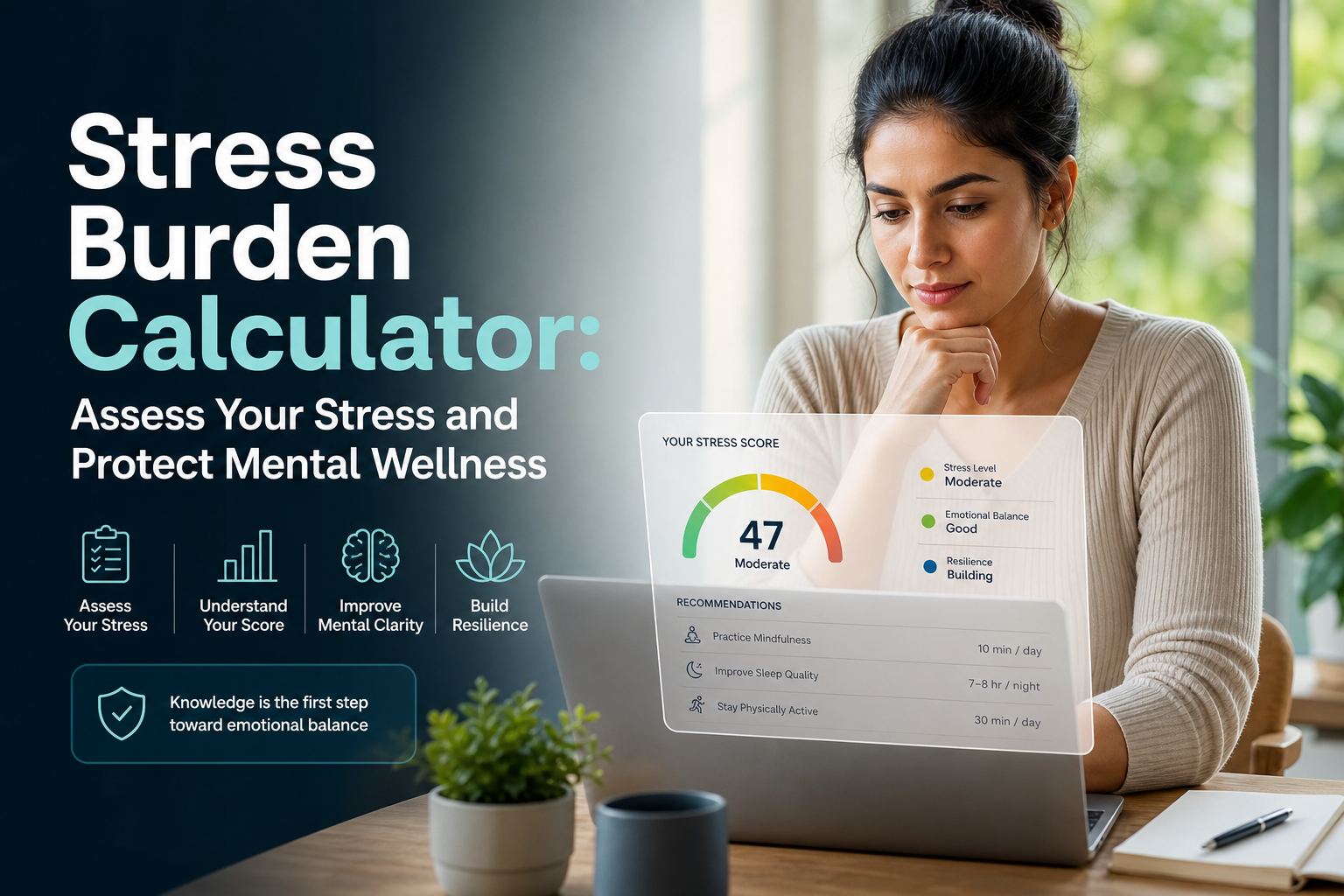
Stress Burden Calculator: A Practical Guide to Understanding Your Stress Load
Stress is not only about having a busy schedule. It is the combined pressure of responsibilities, uncertainty, relationships, work demands, health concerns, financial strain, and the way your mind and body respond to them. A stress burden calculator can help you pause, reflect, and understand how much stress may be affecting your emotional wellbeing.
While no online tool can diagnose a mental health condition, a structured online stress calculator can support stress awareness by helping you recognize patterns in perceived stress, coping capacity, and lifestyle strain. When used thoughtfully, it becomes a practical first step toward better mental wellness.
What Is a Stress Burden Calculator?
A stress burden calculator is a self-assessment tool designed to estimate how heavily stress is weighing on your daily life. It usually asks questions about your thoughts, feelings, behaviors, and physical responses over a recent period, such as the past week or month.
The goal is not to label you. Instead, it helps you understand your current stress load and whether your coping strategies are keeping up with your demands. Many tools are inspired by established stress assessment concepts, including perceived stress, resilience, emotional regulation, and lifestyle factors.
How Stress Burden Differs From Everyday Stress
Everyday stress may come and go. Stress burden is the accumulated impact of stressors over time. For example, one difficult meeting may be stressful, but weeks of poor sleep, deadlines, family worries, and constant tension can create a heavier burden.
Signs of a high stress burden may include:
- Feeling overwhelmed or unable to switch off
- Irritability, low mood, or emotional exhaustion
- Difficulty concentrating or making decisions
- Sleep disruption or persistent fatigue
- Changes in appetite, motivation, or social connection
- More frequent headaches, muscle tension, or digestive discomfort
Why Stress Assessment Matters for Mental Wellness
Many people wait until stress becomes severe before taking action. A stress assessment encourages earlier awareness. By checking in with yourself regularly, you can identify when your stress level is rising and adjust before burnout, conflict, or unhealthy coping patterns take hold.
Stress screening is especially useful because stress can become familiar. You may normalize constant pressure, poor sleep, or emotional numbness because you have adapted to functioning that way. A stress level test can provide an outside structure for noticing what you might otherwise dismiss.
The Role of Perceived Stress
Perceived stress refers to how unpredictable, uncontrollable, and overloaded life feels to you. Two people may face similar circumstances but experience them very differently depending on support, resources, past experiences, personality, and current health.
This is why evidence-based stress assessment often focuses not just on what is happening, but how you are experiencing it. The perceived stress scale, including the PSS test and PSS-10 format, is widely recognized in research and wellness settings as a way to reflect on stress perception.
How a Stress Burden Calculator Works
Most stress calculators ask you to respond to a series of statements or questions. These may explore how often you feel unable to control important things, how frequently you feel confident handling personal problems, or whether you feel nervous, overloaded, or emotionally drained.
Your answers are typically converted into a score or stress range. This result may suggest low, moderate, or high stress burden. A well-designed mental health tool should also provide guidance about what your result means and what steps may help.
If you want a structured way to reflect on your stress level, a PSS-10 online stress screening tool can help you better understand perceived stress and decide whether lifestyle changes or additional support may be beneficial.
What Your Result Can and Cannot Tell You
A stress test can help you identify risk signals, but it is not a clinical diagnosis. It cannot determine whether you have anxiety, depression, trauma-related concerns, or another health condition. However, it can encourage meaningful self-reflection and help you communicate more clearly with a healthcare or mental health professional if needed.
Think of the result as a snapshot, not a permanent identity. Stress changes with sleep, workload, relationships, physical health, financial pressures, and social support. Repeating a stress assessment over time may help you track patterns and measure the impact of healthier routines.
Key Factors That Influence Your Stress Burden
Stress is multi-layered. A useful stress burden calculator considers more than one area of life. Your score may be influenced by several factors working together.
1. Workload and Time Pressure
Long hours, unclear expectations, job insecurity, caregiving duties, and constant digital availability can all increase stress. Even meaningful work can become draining when recovery time is limited.
2. Sleep and Physical Recovery
Poor sleep reduces emotional regulation and problem-solving ability. It can make ordinary challenges feel much larger. Regular rest, movement, and nutrition are core foundations of stress management.
3. Emotional Support
Supportive relationships can buffer stress. Isolation, conflict, or feeling misunderstood can intensify it. Emotional wellbeing improves when you have safe spaces to talk, process, and receive help.
4. Coping Strategies
Coping strategies can be helpful or harmful. Exercise, journaling, breathing exercises, planning, therapy, and healthy boundaries can reduce stress. Avoidance, overworking, excessive alcohol, doomscrolling, or emotional suppression may provide short-term relief but increase long-term strain.
5. Sense of Control
Stress often rises when life feels unpredictable or uncontrollable. Building small areas of control, such as a morning routine, budget review, task prioritization, or scheduled recovery time, can support resilience.
Evidence-Based Ways to Lower Your Stress Burden
Once you understand your stress level, the next step is action. The most effective stress management plan is realistic, personalized, and repeatable. You do not need to overhaul your entire life in one day.
Use a Simple Daily Check-In
Ask yourself three questions each day:
- What is creating the most pressure right now?
- What is one thing I can control today?
- What kind of recovery does my body or mind need?
This brief check-in builds awareness and helps prevent automatic stress reactions.
Practice Nervous System Regulation
Slow breathing, progressive muscle relaxation, mindfulness, and grounding techniques can help calm the stress response. One simple method is to inhale for four counts, exhale for six counts, and repeat for two to five minutes.
Strengthen Boundaries
Boundaries protect your energy. This may mean turning off work notifications after hours, saying no to extra commitments, creating quiet time, or asking for clearer expectations. Boundaries are not selfish; they are part of sustainable mental wellness.
Move Your Body Regularly
Physical activity is one of the best-supported ways to reduce stress. Walking, stretching, dancing, cycling, yoga, or strength training can help release tension and improve mood. Start small if motivation is low.
Improve Sleep Habits
A consistent sleep schedule, reduced evening screen exposure, caffeine awareness, and a calming wind-down routine can support better recovery. Sleep is not wasted time; it is stress repair time.
Talk to Someone You Trust
Stress becomes heavier when carried alone. A friend, family member, counselor, coach, or support group can offer perspective and emotional connection. If stress feels unmanageable, persistent, or linked to thoughts of self-harm, seek professional or emergency support immediately.
When to Seek Professional Support
Consider speaking with a qualified healthcare provider or mental health professional if stress is interfering with your work, relationships, sleep, appetite, mood, or daily functioning. Professional support may also be important if you feel constantly anxious, hopeless, emotionally numb, or unable to cope.
An online stress calculator can be a helpful starting point, but it should not replace personalized care. A professional can help identify underlying issues, recommend appropriate support, and guide you toward healthier coping strategies.
How Often Should You Take a Stress Level Test?
For general awareness, many people benefit from checking their stress level monthly or during major life changes. You might also use a stress screening tool after a demanding work period, family transition, health challenge, or when you notice signs of emotional overload.
The purpose is not to obsess over a score. It is to build a habit of self-awareness. Over time, your results can help you notice what increases stress, what supports resilience, and which stress management practices actually work for you.
FAQ About the Stress Burden Calculator
What does a stress burden calculator measure?
It measures your perceived stress and overall stress load based on your responses to questions about emotions, coping, control, overwhelm, and daily functioning.
Is a stress calculator the same as a diagnosis?
No. A stress calculator is a self-assessment and awareness tool. It cannot diagnose a mental health condition or replace advice from a qualified professional.
What is the perceived stress scale?
The perceived stress scale is a widely used framework for assessing how unpredictable, uncontrollable, and overloaded you feel in daily life. The PSS-10 is a common 10-question version.
How accurate is a PSS test online?
A PSS test online can provide useful insight when questions are answered honestly, but results should be interpreted as guidance rather than a clinical conclusion.
Who should use a stress screening tool?
Anyone who feels overwhelmed, emotionally drained, under pressure, or curious about their stress patterns may benefit from a stress screening tool.
What should I do if my stress score is high?
Start with practical steps such as improving sleep, reducing avoidable demands, using calming techniques, and talking to someone supportive. If stress feels unmanageable, seek professional help.
Conclusion: Use a Stress Burden Calculator as a Starting Point
A stress burden calculator is most valuable when it leads to greater awareness and healthier action. Your stress score is not a judgment. It is information that can help you understand your emotional wellbeing, strengthen coping strategies, and make better decisions for your mental wellness.
If you are ready to check in with yourself, use this mental wellness assessment to better understand your current stress level and take the next step toward a calmer, more resilient life.
Call to action: Take a few minutes today to assess your stress, reflect on your results, and choose one small evidence-based stress management habit you can practice this week.