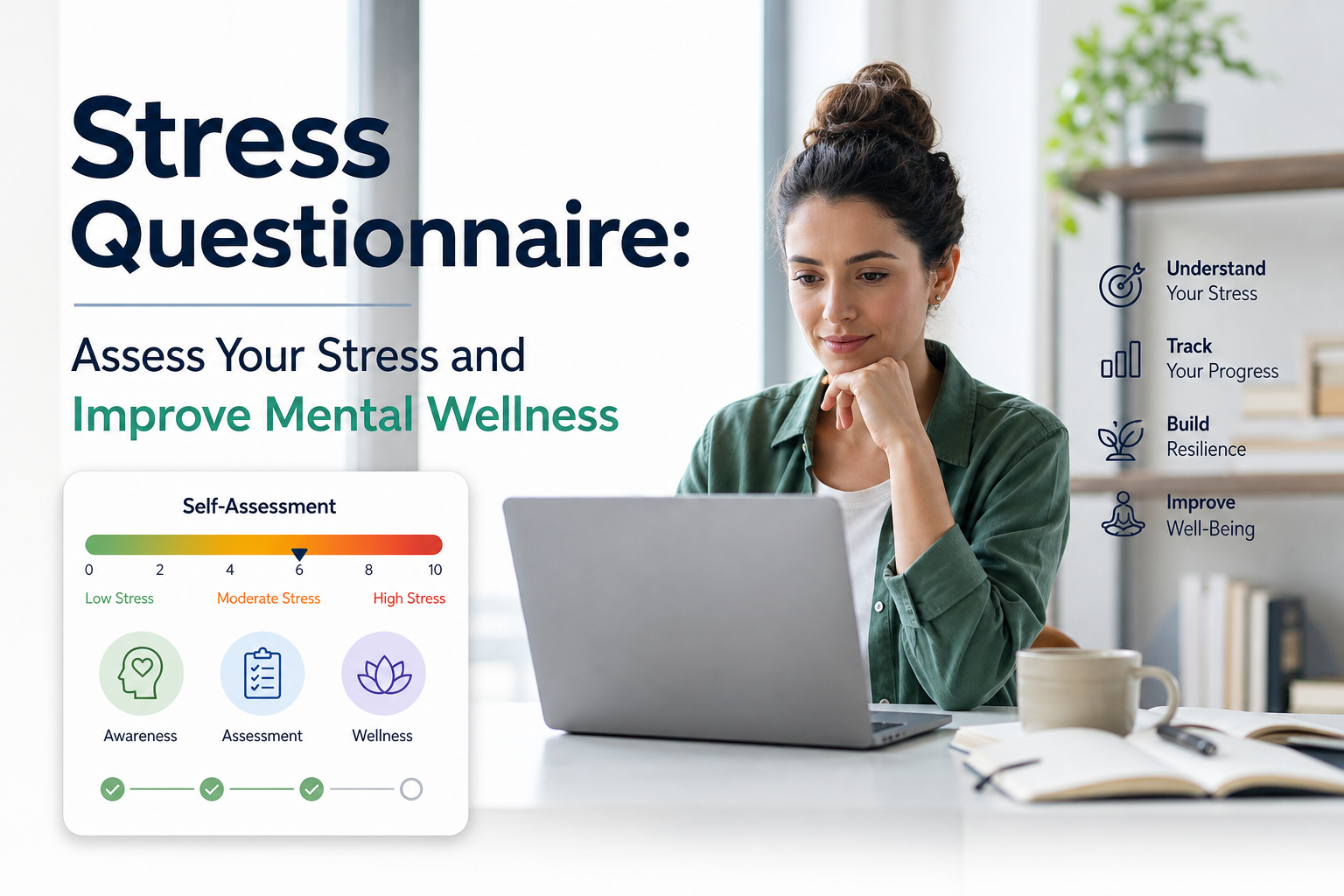
Stress Questionnaire: A Practical Way to Understand Your Stress Level
A stress questionnaire can help you pause, reflect, and better understand how stress is affecting your thoughts, emotions, body, and daily routines. While everyone experiences pressure from time to time, ongoing stress can influence sleep, concentration, relationships, motivation, and overall emotional wellbeing.
Using a structured stress assessment is not about labeling yourself. It is about building awareness. If you want a simple starting point, an online stress calculator can help you explore your current stress patterns and decide what supportive steps may be useful.
This guide explains how stress questionnaires work, what they measure, how they relate to tools such as the perceived stress scale, and how to use your results responsibly as part of a broader mental wellness plan.
What Is a Stress Questionnaire?
A stress questionnaire is a structured set of questions designed to measure how overwhelmed, tense, or unable to cope a person feels over a specific period. Many stress screening tools ask about recent experiences, including emotional strain, perceived control, irritability, fatigue, and difficulty relaxing.
Unlike a casual quiz, a well-designed stress test focuses on patterns. It may ask how often you felt nervous, how frequently you struggled to manage responsibilities, or whether unexpected events felt difficult to handle. These questions can reveal how you perceive stress rather than simply counting stressful events.
That distinction matters. Two people may face similar life demands but experience them differently based on coping strategies, social support, sleep, lifestyle factors, past experiences, and resilience.
Why Stress Awareness Matters
Stress awareness is the first step toward healthier stress management. Many people normalize constant tension until it begins to affect daily functioning. A stress level test can help you notice signals you may have been ignoring.
Common signs of elevated stress may include:
- Racing thoughts or difficulty switching off
- Sleep disruption or waking up tired
- Muscle tension, headaches, or digestive discomfort
- Feeling impatient, emotionally reactive, or withdrawn
- Low motivation or difficulty concentrating
- Increased reliance on caffeine, alcohol, or other coping habits
These signs do not automatically mean you have a mental health condition. However, they may indicate that your nervous system is under sustained pressure and that your emotional health deserves attention.
How a Stress Questionnaire Supports Mental Wellness
A stress questionnaire can be useful because it turns vague feelings into clearer information. Instead of saying, “I feel stressed all the time,” you can identify whether your stress is mild, moderate, or high, and which areas of life may be contributing most.
It Encourages Self-Reflection
Many people move through demanding schedules without checking in with themselves. A stress assessment creates a structured moment to ask: How am I coping? What feels manageable? What feels out of control?
It Helps Track Change Over Time
Repeating a stress screening every few weeks can show whether your coping strategies are helping. For example, improved sleep, regular movement, healthier boundaries, and mindfulness practices may gradually lower perceived stress.
It Can Guide Supportive Conversations
If stress is affecting your work, relationships, or wellbeing, questionnaire results can help you communicate more clearly with a healthcare professional, counselor, coach, or trusted support person.
Understanding the Perceived Stress Scale and PSS Test
One of the most widely recognized approaches to stress measurement is the Perceived Stress Scale. The PSS test is designed to assess how unpredictable, uncontrollable, and overloaded a person has found their life recently. The PSS-10 version includes 10 questions and is commonly used in research and wellness settings.
A PSS-10 online stress screening tool can provide a convenient way to reflect on perceived stress. However, it is important to understand that online tools are educational and informational. They do not provide a medical diagnosis, and they should not replace professional evaluation when symptoms are severe, persistent, or interfering with daily life.
The value of a PSS-style stress questionnaire is that it focuses on perception. Stress is not only about what happens to you; it is also about how equipped you feel to respond.
What a Stress Questionnaire Can and Cannot Tell You
A stress questionnaire can offer meaningful insight, but it has limits. Knowing those limits helps you use results wisely.
What It Can Tell You
- Whether your current stress level appears low, moderate, or elevated
- How often you feel overwhelmed or unable to manage demands
- Whether your coping resources may need strengthening
- Whether lifestyle habits may be contributing to stress
- When it may be helpful to seek additional support
What It Cannot Tell You
- It cannot diagnose anxiety, depression, burnout, or trauma-related conditions
- It cannot identify every cause of emotional distress
- It cannot replace care from a qualified mental health professional
- It cannot predict exactly how stress will affect your health
If you feel unsafe, hopeless, unable to function, or overwhelmed by thoughts of self-harm, seek immediate help from emergency services, a crisis hotline, or a licensed professional in your area.
Key Factors That Influence Stress Levels
Stress does not exist in isolation. A high score on a stress questionnaire may reflect several interacting factors, including your environment, habits, responsibilities, and support system.
Sleep Quality
Poor sleep can lower emotional resilience and make everyday challenges feel harder. Consistent sleep routines, reduced evening screen exposure, and calming wind-down habits can support stress recovery.
Workload and Boundaries
Long hours, unclear expectations, and constant availability can increase perceived stress. Setting realistic boundaries and prioritizing tasks can reduce mental overload.
Relationships and Social Support
Supportive relationships can buffer stress. Isolation, conflict, or caregiving strain can intensify it. Talking with someone you trust can be a meaningful coping strategy.
Physical Activity and Nutrition
Regular movement, balanced meals, and hydration support the body’s ability to manage stress. You do not need extreme routines; even short walks can help regulate mood and energy.
Thinking Patterns
Catastrophic thinking, perfectionism, and constant self-criticism can raise perceived stress. Cognitive reframing, journaling, and mindfulness can help create more balanced perspectives.
Evidence-Based Stress Management Strategies
After taking a stress questionnaire, the next step is action. Stress management works best when it is practical, repeatable, and suited to your real life.
Practice Slow Breathing
Slow, steady breathing can help calm the body’s stress response. Try inhaling for four counts, exhaling for six counts, and repeating for two to five minutes.
Use Problem-Focused Coping
When a stressor is within your control, break it into smaller steps. Make a list, identify the next action, and set a realistic timeline. This can reduce the feeling of being stuck.
Use Emotion-Focused Coping
When you cannot immediately change a situation, focus on regulating your response. Examples include talking with a friend, practicing mindfulness, listening to calming music, or writing down your feelings.
Build Recovery Into Your Day
Stress becomes more harmful when there is no recovery time. Schedule short breaks, stretch, step outside, or take a few quiet minutes between tasks.
Strengthen Resilience Gradually
Resilience is not about ignoring stress. It is the ability to adapt, recover, and ask for help when needed. Supportive routines, flexible thinking, and healthy relationships all contribute to resilience.
When Should You Take a Stress Questionnaire?
You may benefit from a stress questionnaire if you have noticed changes in your mood, sleep, patience, focus, or energy. It can also be helpful during major life transitions, such as a new job, academic pressure, financial strain, caregiving responsibilities, relationship changes, or health concerns.
Consider taking a stress test when:
- You feel overwhelmed more often than usual
- You are unsure whether your stress level is manageable
- You want to track the effect of lifestyle changes
- You are preparing to discuss stress with a professional
- You want a clearer picture of your emotional wellbeing
How to Interpret Your Results Responsibly
Results from a stress calculator or PSS test should be viewed as a snapshot, not a permanent label. Your score may be influenced by recent events, sleep, illness, workload, or emotional strain. If your score is elevated, use it as a prompt to adjust your coping strategies and seek support if needed.
Ask yourself these follow-up questions:
- What are the biggest sources of stress right now?
- Which stressors are within my control?
- What habits are helping me cope?
- What habits may be making stress worse?
- Who can I talk to for support?
If stress remains high despite lifestyle changes, or if it affects your ability to work, study, care for yourself, or maintain relationships, consider speaking with a licensed mental health professional.
FAQ About Stress Questionnaires
What is the purpose of a stress questionnaire?
A stress questionnaire helps you assess perceived stress, identify patterns, and understand how stress may be affecting your emotional wellbeing and daily life.
Is a stress questionnaire the same as a diagnosis?
No. A stress questionnaire is a mental health tool for awareness and screening. It does not diagnose medical or psychological conditions.
How often should I take a stress level test?
You can take a stress level test every few weeks or during major life changes to monitor patterns. Avoid retaking it obsessively, as that may increase worry.
What is the perceived stress scale?
The perceived stress scale is a validated questionnaire that measures how unpredictable, uncontrollable, and overloaded life has felt recently.
Can a PSS-10 online test help with stress management?
Yes, a PSS-10 online test can support self-awareness and guide coping strategies, but it should be used as an educational tool rather than a clinical diagnosis.
What should I do if my stress score is high?
Start with practical steps such as improving sleep, reducing overload, using relaxation techniques, and seeking social support. If stress is persistent or severe, speak with a qualified professional.
Conclusion: Use a Stress Questionnaire as a Starting Point
A stress questionnaire is a simple but valuable way to understand your current stress level, reflect on emotional health, and make informed choices about stress management. By measuring perceived stress, you can recognize when daily pressure is becoming too much and take steps to protect your mental wellness.
Remember, stress awareness is not about judgment. It is about noticing what your mind and body are telling you, strengthening coping strategies, and getting support when necessary.
If you are ready to better understand your stress patterns, use a trusted mental wellness assessment today and take one practical step toward greater balance, resilience, and emotional wellbeing.