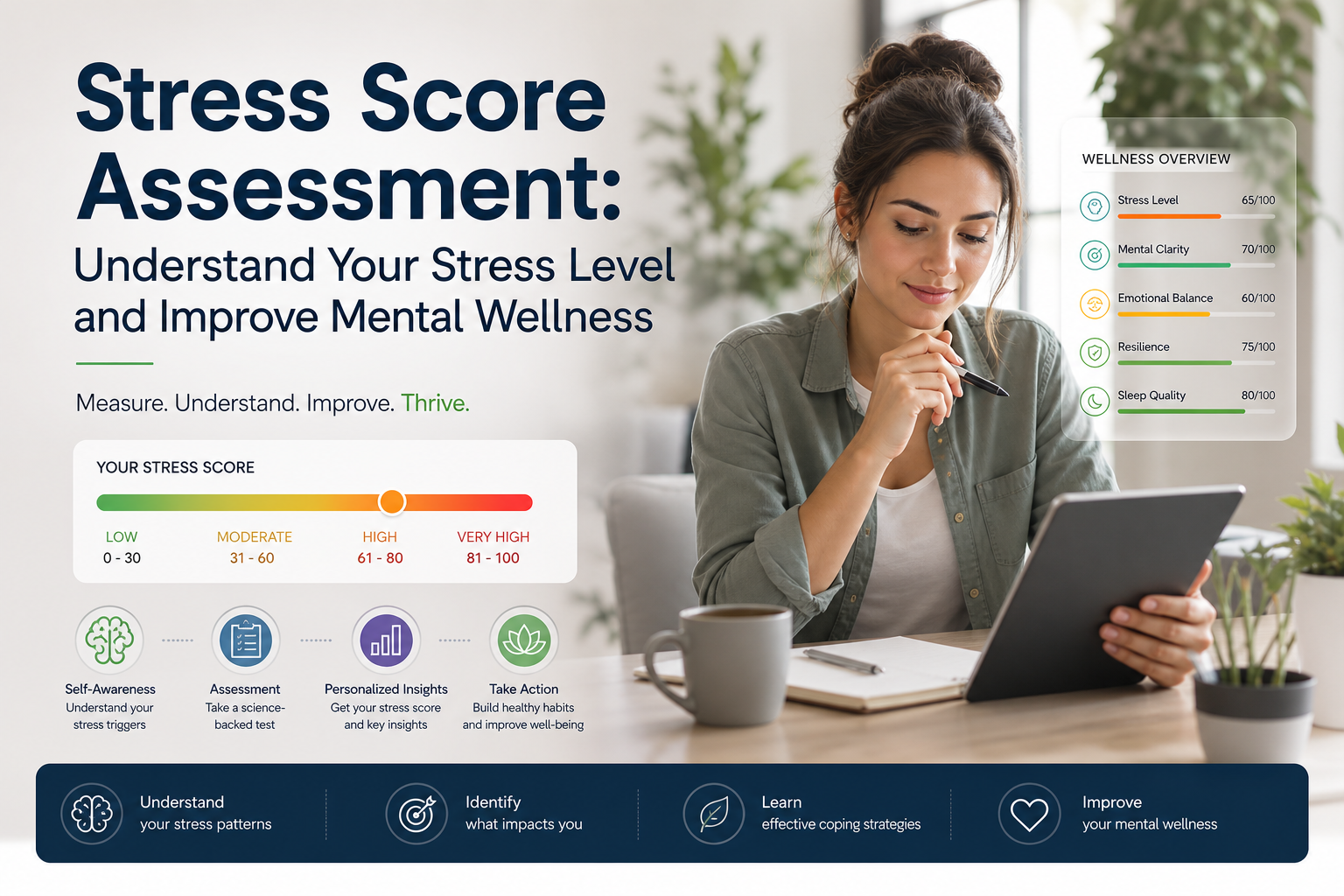
Stress is part of everyday life, but when it becomes constant, overwhelming, or difficult to recover from, it can affect your emotional wellbeing, sleep, relationships, focus, and physical health. A stress score assessment can help you pause, reflect, and better understand how much pressure you may be carrying.
A stress score does not diagnose a mental health condition. Instead, it offers a structured way to look at perceived stress: how unpredictable, uncontrollable, and overloaded life has felt recently. For many people, this kind of stress assessment is the first step toward better self-awareness, healthier coping strategies, and more intentional stress management.
What Is a Stress Score Assessment?
A stress score assessment is a mental health tool designed to estimate your current stress level based on your thoughts, feelings, and reactions to life demands. It usually asks questions about how often you have felt nervous, unable to control important things, confident in handling problems, or overwhelmed by responsibilities.
One of the most widely known frameworks is the perceived stress scale, often referred to as the PSS test. The PSS-10 version uses 10 questions to measure perceived stress over the past month. A PSS-10 online assessment can be useful because it turns subjective experiences into a simple score that is easier to understand and track over time.
While a stress calculator cannot replace professional care, it can support stress awareness by helping you identify patterns you may otherwise ignore.
Why Measuring Stress Matters
Stress often builds gradually. You may adapt to feeling tense, tired, irritable, or mentally foggy until it starts to feel normal. A stress level test gives you a structured moment to check in with yourself before burnout, emotional exhaustion, or unhealthy coping habits take deeper root.
Stress affects more than mood
Chronic stress can influence many areas of daily life, including:
- Sleep quality and energy levels
- Concentration and decision-making
- Appetite and lifestyle habits
- Patience, communication, and relationships
- Motivation and productivity
- Emotional resilience and coping capacity
Understanding your stress score can help you decide whether small lifestyle adjustments may be enough or whether you may benefit from support from a counselor, therapist, physician, or other qualified professional.
How a Stress Calculator Works
A stress calculator typically asks you to rate how often certain stress-related experiences have occurred. Your answers are scored and combined into an overall result. Depending on the tool, your score may fall into low, moderate, or high perceived stress ranges.
For example, a PSS-10 online stress screening tool may ask about your sense of control, confidence, overload, and ability to cope with unexpected events. These questions are not about judging your strength. They are about understanding how you are experiencing life pressure right now.
What your stress score can tell you
Your result may help you identify:
- Whether your stress level is mild, moderate, or elevated
- How your stress changes across weeks or months
- Which situations tend to increase emotional strain
- Whether your current coping strategies are working
- When it may be wise to seek additional support
The most valuable part of a stress assessment is not the number itself. It is the reflection that follows.
Understanding Perceived Stress
Perceived stress refers to how stressful your life feels to you, not simply how many challenges you face. Two people can experience the same event very differently depending on their resources, support system, health, mindset, responsibilities, and recovery time.
This is why stress screening tools focus on your perception of control and overwhelm. A busy week may feel manageable if you have support, sleep well, and feel prepared. The same week may feel crushing if you are exhausted, isolated, or dealing with uncertainty.
Common signs your stress may be rising
Although stress looks different for everyone, common warning signs include:
- Feeling tense, restless, or emotionally reactive
- Frequent headaches, muscle tension, or stomach discomfort
- Difficulty falling asleep or waking during the night
- Racing thoughts or constant worry
- Loss of interest in activities you normally enjoy
- Using food, alcohol, screens, or avoidance to cope
- Feeling detached, numb, or easily overwhelmed
If stress is interfering with your safety, daily functioning, relationships, or ability to work, consider reaching out to a qualified mental health professional or healthcare provider.
Evidence-Based Stress Management Strategies
After completing a stress test or stress assessment, the next step is to respond with practical, evidence-informed habits. Stress management is not about eliminating every challenge. It is about improving your ability to recover, adapt, and make healthier choices under pressure.
1. Practice slow breathing
Slow breathing can help calm the body’s stress response. Try inhaling for four seconds, exhaling for six seconds, and repeating for three to five minutes. Longer exhales may support relaxation and reduce physical tension.
2. Protect your sleep routine
Sleep is one of the strongest foundations for emotional wellbeing. Aim for a consistent wake time, reduce caffeine late in the day, and create a wind-down routine away from work emails and intense screen use.
3. Move your body regularly
Physical activity can reduce stress hormones, improve mood, and support resilience. This does not require intense exercise. Walking, stretching, cycling, swimming, or light strength training can all support mental wellness.
4. Name the stressor clearly
Writing down what is causing stress can reduce mental clutter. Separate what you can control from what you cannot. Then choose one small next action, such as making a phone call, setting a boundary, asking for help, or scheduling rest.
5. Strengthen social support
Supportive relationships are protective for mental health. Talking with someone trustworthy can help you process emotions, challenge unhelpful thoughts, and feel less alone. Connection is a coping strategy, not a weakness.
6. Limit unhelpful coping patterns
Short-term relief habits such as doomscrolling, avoidance, overeating, or excessive alcohol use may increase stress over time. Replace one unhelpful habit with a healthier alternative, such as a short walk, journaling, stretching, or calling a friend.
When Should You Retake a Stress Level Test?
Retaking a stress level test can be helpful when your circumstances change or when you are trying new coping strategies. Many people check their score monthly, during demanding seasons, or after making lifestyle adjustments.
Consider reassessing your stress when:
- You start a new job, school term, or caregiving role
- You experience major life changes or uncertainty
- You notice sleep, mood, or motivation changes
- You begin therapy, coaching, or a wellness plan
- You want to track progress over time
Tracking your stress score can make progress more visible. Even a small improvement may show that your coping strategies, boundaries, or support systems are helping.
How to Use Your Results Responsibly
A stress score is a guide, not a label. If your score is low, it may confirm that your current coping strategies are working. If your score is moderate, it may be time to improve sleep, boundaries, movement, and recovery. If your score is high, it may be a signal to seek support and reduce unnecessary pressure where possible.
Use your result as a conversation starter with yourself or a professional. You might ask:
- What has been draining my energy most?
- What helps me recover, and am I doing enough of it?
- Where do I need clearer boundaries?
- Who can support me right now?
- What is one small change I can make this week?
If you experience persistent sadness, panic, thoughts of self-harm, trauma symptoms, or inability to function, seek immediate professional help or emergency support in your area.
FAQ About Stress Score Assessment
What is a stress score assessment?
A stress score assessment is a structured questionnaire that helps estimate your current perceived stress level. It can support self-awareness but does not provide a medical diagnosis.
Is a stress calculator accurate?
A stress calculator can be useful for reflection and stress screening, especially when based on established concepts such as the perceived stress scale. However, results should be interpreted as guidance, not a clinical conclusion.
What is the PSS test?
The PSS test, or Perceived Stress Scale, measures how unpredictable, uncontrollable, and overloaded life has felt recently. The PSS-10 is a common 10-question version.
How often should I take a stress level test?
Many people retake a stress level test monthly or during major life changes. Regular check-ins can help you track patterns and evaluate whether stress management strategies are working.
Can a high stress score mean I have anxiety or depression?
Not necessarily. A high score may indicate elevated perceived stress, but it cannot diagnose anxiety, depression, or any other condition. Speak with a qualified professional for assessment and support.
What should I do after getting a high stress score?
Start with basic supports such as sleep, movement, breathing exercises, and social connection. If stress feels unmanageable or affects daily life, consider contacting a mental health professional.
Conclusion: Use a Stress Score Assessment as a Starting Point
A stress score assessment can help you understand your emotional load, recognize patterns, and take practical steps toward better mental wellness. Your score is not a judgment of your character or capability. It is information you can use to protect your wellbeing and build resilience.
Stress awareness works best when paired with action. Review your results, choose one realistic coping strategy, and give yourself permission to seek support when needed. To begin, use a mental wellness assessment that helps you reflect on your current stress level and make your next healthy step clearer.
Call to action: Take a few minutes today to assess your stress, understand your score, and start building a calmer, more resilient routine.